
The relationship between population growth and land value expansion is one of the most fundamental principles in real estate economics. Unlike physical structures, consumer products, or industrial equipment, which can be manufactured in response to market demand, the Earth features a fixed physical supply of land. When regional populations expand through natural demographic increase, domestic migration, or corporate employment relocations, the demand for physical space rises. This interaction between expanding human activity and fixed geographic supply creates systemic upward pressure on land values across metropolitan statistical areas, suburban edges, and rural expansion corridors.
For real estate investors, urban planners, and policy makers, evaluating how demographic growth alters land economics requires looking beyond basic headcount increases. Population growth changes how land is utilized, shifting low-density agricultural tracts into high-density residential subdivisions, commercial retail centers, and logistics hubs. Understanding the precise economic mechanisms, spatial expansion patterns, infrastructure demands, and municipal regulatory responses that govern demographic growth allows investors to locate high-growth expansion corridors early, acquire strategic land holdings, and capture substantial long-term capital appreciation.
The Core Economic Mechanics of Land Scarcity and Demand
To understand how population growth drives land appreciation, one must examine the economic concept of derived demand and inelastic land supply. Land value is inherently derived from the economic productivity, utility, and human activity that can occur on a specific parcel.
As a regional population grows, the demand for primary real estate uses increases proportionally. More residents require housing units, retail shopping centers, medical facilities, schools, recreational parks, and industrial distribution warehouses to support daily life. Because the total physical supply of land within a given geographic radius remains entirely fixed and inelastic, the increased competition for buildable acreage forces market land prices upward.
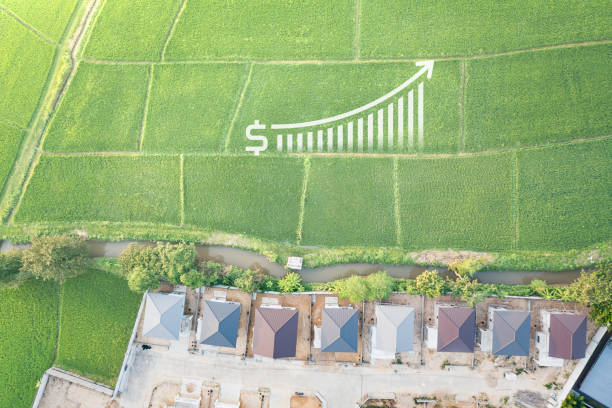
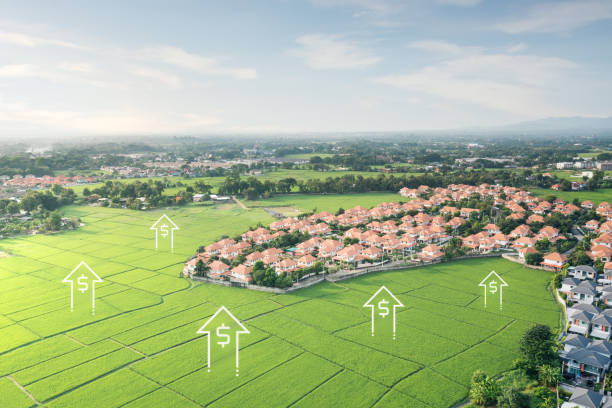
Furthermore, population growth increases spatial density near economic centers. When central urban land becomes fully built out and prohibitively expensive, developers must either build vertically through high-density redevelopment or expand horizontally into peripheral rural regions. This horizontal expansion, commonly known as suburban sprawl, converts low-cost rural acreage into high-value urban fringe real estate. The transition from agricultural valuations to residential development pricing creates substantial jumps in per-acre market value.
Spatial Transition Phases Driven by Demographic Expansion
Demographic expansion alters land utility across distinct geographic zones over multi-decade cycles. As population waves move outward from central business districts, surrounding land transitions through predictable value escalation phases.
The outermost geographic zone is the rural hinterland, located far beyond active commuter boundaries. In this phase, land values reflect raw resource productivity, such as timber yields, crop production, or livestock grazing capacity. As regional population growth accelerates, these rural parcels enter the speculative path-of-growth phase. Investors and master-plan developers begin acquiring large agricultural tracts, anticipating that future municipal infrastructure extensions will make the land viable for residential subdivisions within a ten-to-twenty-year horizon.
The most intense value escalation occurs during the suburban transition phase. As population influxes reach the property boundary, municipal authorities rezone agricultural land for residential and commercial uses, civil contractors install utility mains, and homebuilders compete for buildable lots. The land’s market value shifts from wholesale agricultural pricing to retail developer lot pricing. Finally, as the suburban area matures into an established urban node, remaining vacant lots enter the infill phase, where scarcity commands premium pricing per square foot.
Comparative Matrix of Demographic Spatial Transition Zones
Analyzing how demographic density, land utility, and growth rates evolve across geographic transition zones helps investors identify ideal entry points. The table below compares four primary spatial transition zones driven by population growth:
| Spatial Transition Zone | Typical Population Density | Primary Land Utility Status | Value Growth Velocity | Primary Buyer Demographic |
| Rural Hinterland | Very low; under 50 people/sq mi | Farming, timber, open pasture | Slow; tracks broad inflation | Farmers, timber funds, rural buyers |
| Path-of-Growth Corridor | Low; 50 to 250 people/sq mi | Speculative holding, interim leases | Accelerated; 8% to 15% annually | Strategic land bankers, funds |
| Suburban Edge Fringe | Moderate; 250 to 1,500 people/sq mi | Active residential subdivisions | Peak escalation; 15% to 30%+ | Master homebuilders, retail builders |
| Urban Infill Center | High; 1,500+ people/sq mi | High-density multi-family, retail | High baseline price; steady growth | Commercial developers, end-users |
Tracking population density trends across these zones enables investors to acquire land right before the peak escalation phase occurs.
Infrastructure Demand as an Acceleration Multiplier
While population growth creates baseline demand for physical space, public infrastructure investments act as the operational catalyst that translates demographic pressure into actual land appreciation. Raw land cannot accommodate high-density human populations without supporting transportation and utility networks.
As regional populations expand, local governments and state departments of transportation allocate capital budgets to construct new high-speed highway corridors, expand arterial roadways, build outer ring road bypasses, and add freeway interchanges. These transportation investments reduce transit times between peripheral rural land and primary urban employment hubs. A population-driven highway expansion that reduces a daily commute from sixty minutes to twenty-five minutes overnight transforms remote farmland into prime commuter housing land, causing price per acre to surge.
Similarly, demographic growth necessitates expanding municipal utility infrastructure, including high-capacity water treatment plants, sanitary sewer trunk lines, electrical substations, and natural gas pipelines. Land that relies solely on private water wells and septic drain fields is limited to low-density, multi-acre residential lots. When population growth forces municipalities to extend public water and sewer mains to a property’s boundary, allowable building density increases dramatically, multiplying the land’s total commercial value.
Migration Patterns, Household Formation, and Demographic Segments
Broad population headcount metrics alone do not tell the complete story of land value expansion; the specific characteristics and age demographics of the population influx play a critical role in shaping land demand.
Household formation rates represent a major driver of residential land value. For instance, when a large segment of the population enters prime family-building years, the demand for single-family homes, suburban yards, public schools, and community shopping centers surges. This demographic shift drives homebuilders to acquire suburban edge land to construct single-family residential neighborhoods. Conversely, an influx of young professionals or retirees drives demand for high-density multi-family land near urban centers or transit-oriented development hubs.
In-migration source markets also influence land pricing capacity. When high-earning households move from high-cost, densely populated metropolitan areas to lower-cost, high-growth regions, they bring elevated purchasing power. This influx of capital increases regional housing budgets, allowing developers to pay higher prices for raw land while maintaining profitable margins on finished homes.
Comparative Breakdown of Demographic Drivers and Land Value Impact
Evaluating different population metrics reveals varying timelines and financial impacts across land investment categories. The table below outlines key demographic drivers, their land use effects, and value impacts:
| Demographic Driver Category | Primary Land Use Demand Impact | Target Land Category Affected | Typical Value Appreciation Impact |
| Net Domestic In-Migration | High single-family housing & retail | Suburban edge & path-of-growth | Immediate, high per-acre price growth |
| Young Family Formation | Single-family lots, schools, parks | Master-planned residential tracts | Sustained, multi-year demand growth |
| Corporate Job Creation | Industrial parks, office, logistics | Commercial corridors & highway nodes | Premium price spikes on highway sites |
| Aging Population Influx | Healthcare, multi-family, age-restricted | Urban infill & suburban commercial | Stable, recession-resilient land values |
Identifying which demographic driver is active in a regional market helps investors select the right category of land to acquire.
Municipal Regulatory Responses and Zoning Densification
As population growth increases pressure on existing land supplies, municipal governments must update land-use policies, comprehensive master plans, and zoning ordinances to manage urban expansion. These regulatory responses directly influence land values.
To prevent unchecked urban sprawl and protect agricultural open space, many municipalities establish urban growth boundaries or greenbelt preservation zones. An urban growth boundary is a legally enforced perimeter surrounding a city, outside of which high-density urban development is prohibited. When population growth continues within a restricted urban growth boundary, the supply of developable land inside the line becomes artificially scarce. This regulatory bottleneck drives up the market value of buildable parcels located inside the boundary, while keeping land values outside low.
Concurrently, growing cities frequently implement upzoning initiatives inside established urban footprints. Upzoning involves changing municipal zoning designations to allow higher building density, such as reclassifying single-family residential zones to permit multi-family townhomes, apartments, or mixed-use commercial buildings. By increasing the number of buildable housing units allowed on a single parcel, upzoning increases the land’s earning potential and market value per square foot.
Microeconomic Indicators That Signal Population Growth Signals
Investors seeking to capitalize on population-driven land appreciation must learn to track early microeconomic indicators that signal impending demographic surges before official census data is published.
Commercial corporate activity represents a reliable leading indicator. Major corporate office relocations, regional distribution center announcements, and industrial manufacturing plant builds always precede population growth. When a major employer announces a new facility that will create thousands of local jobs, housing demand follows as workers move to the area. Identifying these employment announcements allows land investors to acquire acreage before homebuilders begin competing for subdivision sites.
Additional micro-level signals include school district enrollment trends, residential building permit issuance rates, utility connection requests, and local retail sales tax collection increases. Furthermore, national homebuilders purchasing large option contracts on rural farmland serves as a clear signal that institutional market research indicates an approaching population expansion wave.
Step-by-Step Framework for Investing in High-Growth Corridors
To systematically target land parcels positioned to benefit from demographic expansion, investors should execute a disciplined, data-backed step-by-step framework:
- Screen Metropolitan Statistical Areas for High Net In-Migration: Analyze regional census updates, domestic migration studies, and state employment data to identify top-tier growth markets.
- Map Major Infrastructure Expansion Vectors: Review state transportation department plans, outer loop highway projects, and regional airport expansion budgets.
- Audit Municipal Comprehensive Plans and Zoning Maps: Identify designated future growth zones, utility service expansion boundaries, and urban growth limits.
- Identify Transitional Path-of-Growth Acreage: Locate agricultural or unimproved rural parcels situated directly between active suburban development and planned infrastructure nodes.
- Verify Technical Site Buildability and Legal Access: Perform soil percolation testing, verify unencumbered public road access, and audit potential environmental wetland restrictions.
- Structure Low-Cost, Income-Generating Holding Models: Enroll acreage in agricultural or forestry tax abatement programs and execute crop or solar leases to eliminate carrying cost drag.
- Time Your Exit to Residential and Commercial Developers: Sell the property to master-plan builders or commercial developers as population density reaches the parcel perimeter.
Following this structured step-by-step approach aligns your capital deployment with documented demographic shifts and municipal infrastructure investments.
Demographic Downside Risks and Market Contraction
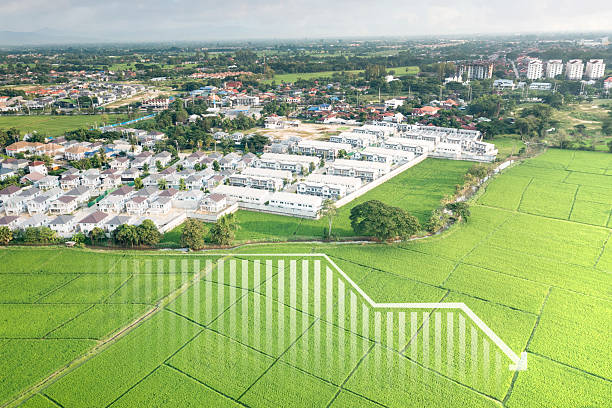
While population growth drives land appreciation, demographic stagnation or net population outflow poses severe risks to land investments. Investing in regions experiencing population decline can result in extended illiquidity and stagnant property values.
Regional economic single-industry reliance represents a major hazard. Cities built around a single industrial sector, such as coal mining, legacy manufacturing, or military bases, are vulnerable to severe population losses if primary employers downsize or relocate. When job opportunities dry up, out-migration accelerates, housing demand collapses, and homebuilders halt land acquisitions. Raw land in declining markets can remain illiquid for decades, forcing landowners to absorb ongoing property tax expenses without capturing appreciation.
Furthermore, national demographic shifts, such as declining birth rates and aging populations, can alter long-term demand trends. Regions that fail to attract young, economically active migrants face shrinking labor forces and reduced housing demand. Investors must carefully differentiate between temporary, speculative land price spikes and sustainable, long-term growth backed by job creation and net in-migration.
Assembling Your Demographic and Real Estate Research Team
Evaluating population dynamics and land appreciation potential across different markets requires building a professional network of research, legal, and real estate specialists.
Your research team should include a specialized commercial land broker who possesses deep local market knowledge, tracks regional price-per-acre transaction data, and maintains relationships with municipal planning staff and master builders. Partner with a qualified real estate attorney experienced in land-use regulations, municipal zoning changes, access easement verification, and purchase contract negotiation.
Additionally, collaborate with local civil engineering firms, urban planning consultants, and economic development officials. Civil engineers provide early insights into utility main capacity and highway construction timelines, while local economic development leaders offer visibility into prospective corporate relocations and industrial park expansions. Leveraging expert local knowledge ensures that your land investments rest on verified demographic data and solid infrastructure planning.
Conclusion
Population growth is a fundamental driver of land appreciation, operating through the immutable economic principles of fixed land supply and rising spatial demand. As regional populations expand, human activity forces low-density agricultural land to transition into high-density suburban neighborhoods, commercial corridors, and industrial logistics centers. Infrastructure investments, such as highway extensions and municipal utility connections, act as catalysts that convert demographic pressure into tangible per-acre land value growth. By tracking domestic migration patterns, identifying microeconomic growth signals, securing strategic path-of-growth acreage, and using interim leases to offset carrying expenses, investors can capitalize on demographic expansion. When executed with data-driven research and patience, investing in the path of population growth provides a reliable foundation for long-term equity growth and wealth creation.
Frequently Asked Questions
Why does population growth affect raw land values more than developed buildings?
Population growth affects raw land values more dramatically because the physical supply of land within a specific geographic radius is completely fixed. While developers can construct additional building square footage vertically or renovate existing structures, they cannot create new earth. Increased demographic demand for limited buildable space directly drives up raw land prices.
What is the path of growth in real estate land investing?
The path of growth refers to the specific geographic direction in which a metropolitan area is expanding outward. It is defined by population migration trends, new highway and transit extensions, municipal utility expansions, and suburban residential subdivision development. Land located directly in the path of growth experiences rapid capital appreciation as development approaches.
How do I verify if a county is experiencing net population growth?
You can verify net population growth by reviewing official United States Census Bureau annual population estimates, state economic development reports, and domestic migration studies. Additionally, tracking regional job creation statistics, school district enrollment increases, and residential building permit issuance rates provides real-time confirmation of demographic expansion.
What is upzoning and how does it increase land value?
Upzoning is a municipal regulatory action that alters zoning laws to allow higher building density or broader commercial uses on a parcel of land. By permitting more housing units, townhomes, or commercial square footage per acre, upzoning increases the land’s economic yield and commercial potential, which raises its market value per square foot.
Can land appreciate in value if total population growth remains flat?
Yes, land can appreciate even if broad population growth is flat if localized shifts occur. For example, internal migration from rural areas to regional employment hubs, corporate relocations to specific commercial corridors, major infrastructure highway additions, or local rezoning initiatives can create localized land appreciation despite flat overall regional population numbers.