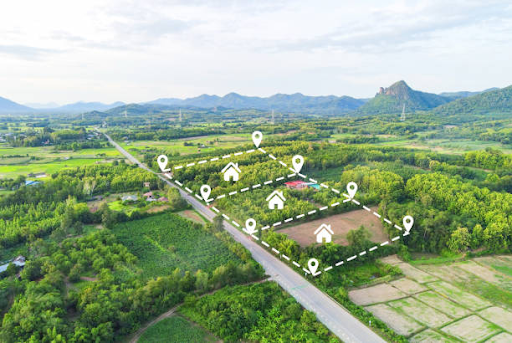
Evaluating raw land for investment potential requires looking beyond simple aesthetic appeal or broad geographical location. While a parcel may feature rolling hills, mature trees, or pleasant rural views, these surface characteristics do not guarantee capital appreciation or site buildability. Unimproved land is a complex asset class where true economic…

The relationship between population growth and land value expansion is one of the most fundamental principles in real estate economics. Unlike physical structures, consumer products, or industrial equipment, which can be manufactured in response to market demand, the Earth features a fixed physical supply of land. When regional populations expand…
Vacant land represents one of the most versatile asset classes in real estate, offering investors a wide spectrum of paths toward long-term wealth accumulation. However, assuming that all raw dirt behaves identically under market pressure is a costly mistake. Residential land and recreational land operate on vastly different economic fundamentals,…
Acquiring vacant land is one of the most reliable wealth-building strategies in real estate, yet treats raw dirt as a single asset class at your peril. Unimproved land varies wildly in terms of financial return profiles, regulatory barriers, physical characteristics, and capital holding requirements. A parcel of agricultural acreage sitting…