
Evaluating wastewater infrastructure is one of the most critical aspects of purchasing residential real estate, commercial property, or vacant land. Every built structure requires a dependable mechanism to collect, treat, and dispose of domestic wastewater safely. In the real estate marketplace, wastewater disposal falls into two distinct functional categories: centralized public sewer systems operated by municipal utility authorities, and decentralized Onsite Wastewater Treatment Systems (OWTS), commonly known as septic systems.
While both systems perform the essential public health function of removing contaminants from water used in bathrooms, kitchens, and laundries, they operate within entirely different financial, operational, and regulatory frameworks. Public sewer systems offer automated utility management, where property owners pay monthly consumption fees to delegate treatment responsibilities to a municipality. Septic systems, conversely, place complete operational, regulatory, and financial management directly on the individual property owner. Understanding the key differences, maintenance requirements, site constraints, and financial profiles of both wastewater options allows buyers to negotiate purchase contracts effectively, conduct thorough technical due diligence, and avoid costly unexpected capital expenses.
The Fundamental Mechanics of Wastewater Infrastructure
To evaluate property buildability and ongoing holding expenses, buyers must first understand how public sewer systems and private septic systems process domestic effluent.
Public sewer networks operate through extensive underground piping systems embedded within public street rights-of-way. Wastewater leaves a building through a single lateral pipe connection, flowing via gravity or mechanical force mains to a centralized municipal treatment facility. At the treatment plant, industrial-grade primary, secondary, and tertiary processing methods filter solids, digest organic matter, and sanitize water before discharging it back into local rivers, bays, or oceans. The entire system outside the individual property line is maintained by municipal public works employees or specialized utility authorities funded through taxpayer dollars and user rates.
Public System Flow: Property Lateral -> Main Sewer Line -> Lift Station -> Centralized Treatment Plant
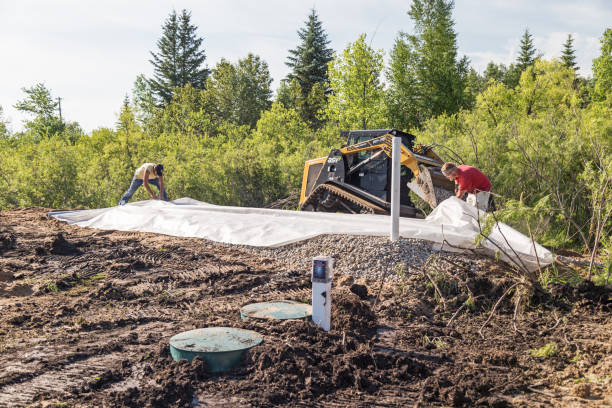
Septic systems operate as self-contained wastewater treatment facilities situated entirely within the physical boundary lines of a private parcel. Waste exits the building into an underground watertight septic tank, typically made of concrete, fiberglass, or polyethylene. Inside the tank, solid waste settles to the bottom as sludge, while oils and grease float to the top as scum. Anaerobic bacteria break down organic solids, while the clarified liquid effluent flows out through a distribution box into an underground absorption field, known as a leach field or drainfield. The soil beneath the leach field acts as a natural biological filter, purifying the effluent before it returns to groundwater aquifers.
Septic System Flow: Household Waste -> Septic Tank -> Distribution Box -> Soil Drainfield -> Aquifer
Comparing Financial Dynamics: Upfront Costs and Long-Term Expenses
The financial profiles of public sewer connections and private septic systems differ significantly regarding initial installation, ongoing operating fees, and long-term capital replacement budgets.
Public sewer systems involve lower ongoing maintenance responsibilities for property owners, but carry fixed recurring operational costs. Joining a public sewer network requires paying one-time municipal tap fees and connection charges during initial construction, which can range from a few thousand to over twenty thousand dollars depending on municipal impact fee schedules. Once connected, the property owner pays recurring monthly or quarterly sewer utility bills based on domestic water usage. If a municipal sewer main experiences structural failure or treatment capacity upgrades are required, public utility authorities fund these projects through special tax assessments or rate increases spread across the community population.
Septic systems eliminate monthly municipal sewer bills, but expose the property owner to concentrated capital expenditure risks. Installing a new standard gravity septic system on vacant land typically costs between seven thousand and fifteen thousand dollars. However, if site conditions feature tight clay soils, shallow ledge bedrock, or elevated groundwater, local health department rules mandate advanced engineered systems, such as mounded disposal fields or aerobic treatment units, which can cost twenty thousand to over forty-five thousand dollars. Furthermore, when a septic system reaches the end of its functional life cycle, replacing the tank or leach field represents an out-of-pocket capital expense borne entirely by the property owner.
Technical Comparison of Wastewater Infrastructure Options
Evaluating the structural, financial, and operational differences between public sewer systems and private septic systems provides essential baseline context for real estate buyers:
| System Parameter | Public Sanitary Sewer | Private Septic System (OWTS) |
| Primary Oversight Body | Municipal utility authority or public works department | Local health department and state environmental agency |
| Recurring Usage Costs | Monthly or quarterly municipal utility billing based on water usage | Zero monthly utility bills; periodic pumping costs every 3 to 5 years |
| Owner Maintenance Burden | Low; owner maintains only the private lateral pipe to the street | High; owner monitors tank levels, inspects components, protects drainfield |
| Operational Lifespan | Central infrastructure maintained indefinitely by municipality | 20 to 30 years average lifespan for private drainfield component |
Understanding these functional trade-offs enables property buyers to align physical site evaluations with their long-term home maintenance budgets.
Site Permitting, Soil Suitability, and Environmental Regulations
Wastewater disposal method determines what can be constructed on a property, dictate minimum allowable lot sizes, and control building placement across the land.
Public sewer connectivity offers maximum design flexibility for land development. Because effluent is piped off-site for processing, building footprints are not constrained by subsurface soil quality or reserve drainfield areas. Properties served by municipal sewer lines can support higher building densities, smaller minimum lot sizes, higher lot coverage percentages, and closer structural setbacks, subject to local municipal zoning schedules. Property buyers evaluating sewer-connected lots need only confirm physical invert elevations to ensure gravity flow, verify line connection rights, and pay applicable municipal tap connection fees.
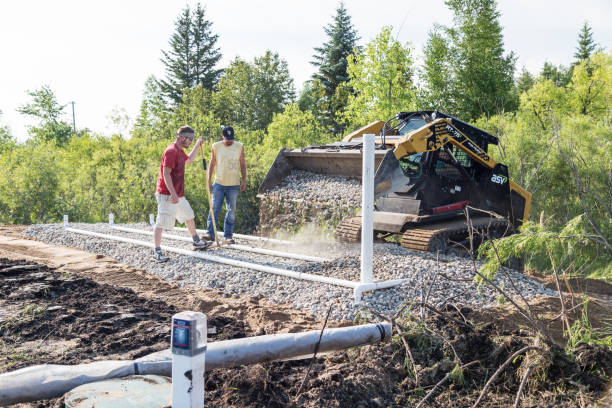
Developing raw land with a private septic system requires strict adherence to environmental regulations and site testing standards enforced by county health departments and state environmental agencies. Before a building permit can be issued for a property using a septic system, the land must undergo rigorous field testing, including deep hole soil observations and percolation testing. Soil evaluators inspect soil columns to verify adequate soil depth, identify restrictive hardpan layers, locate shallow ledge bedrock, and measure maximum seasonal high groundwater elevations.
Septic Feasibility = Deep Hole Soil Dig + Percolation Test Rate + Seasonal Water Table Clearance
If field testing demonstrates that subsurface soils drain too rapidly or slowly, or if high groundwater tables reside within mandated vertical clearance distances of the surface, standard septic systems will be prohibited. In sensitive environmental watersheds, such as coastal salt pond basins or public water supply drinking reservoirs, state regulations enforce strict nitrogen-reducing advanced septic rules, limiting structural buildability and expanding site preparation budgets.
Maintenance Protocols, Property Inspection, and Due Diligence
Conducting thorough technical due diligence during the real estate contract contingency period protects buyers against unbudgeted repairs and operational failures.
For properties connected to a public sewer line, due diligence focuses on verifying the physical condition of the private sewer lateral line running from the building foundation to the municipal main connection in the street. Buyers should hire a licensed plumber to perform a digital video camera scope inspection of the sewer lateral. Camera scope inspections reveal hidden physical defects, such as root intrusion, pipe sagging, cracked clay lines, offset joints, or collapsed piping. Repairing a damaged underground sewer lateral beneath a driveway or front yard can cost several thousand dollars, making pre-closing video verification essential.
Sewer Lateral Due Diligence = Plumber Scope Inspection + Camera Video Audit + Municipal Permit Review
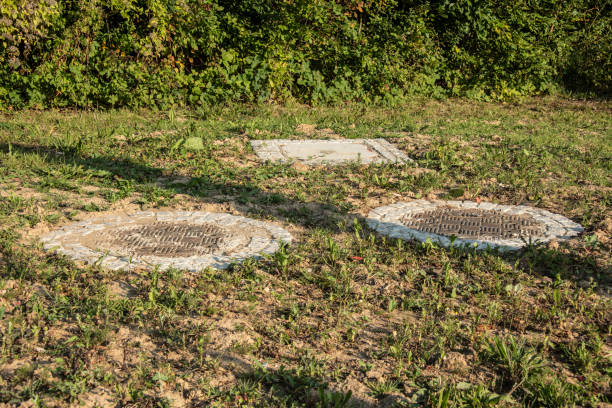
For properties utilizing a private septic system, due diligence requires a comprehensive septic system inspection conducted by a certified septic inspector prior to closing. A thorough septic inspection involves opening the septic tank manhole cover to inspect liquid levels, evaluating baffle wall structural integrity, inspecting electrical effluent pumps, measuring sludge and scum layer accumulation, and running stress tests to confirm that effluent flows freely into the drainfield without backing up into the dwelling. Additionally, buyers must audit municipal health department permit records to verify system age, original design capacity (measured in bedroom count), exact tank location, and recorded maintenance pumping history.
Operational Risk Matrix for Buyers and Property Owners
Evaluating system risks during purchase negotiations enables real estate buyers to manage property maintenance schedules effectively. The matrix below outlines potential system warning signs, underlying causes, and essential verification actions:
| Warning Indicator | Underlying Failure Mechanism | Primary Verification & Remedial Action |
| Sewer Backup in Basement | Blocked sewer lateral due to tree root intrusion or pipe collapse | Perform plumber camera scope inspection; clear obstruction or replace pipe |
| Sponge-like Wet Soil Over Field | Leach field failure, clogged soil pores, or elevated groundwater | Retain septic inspector to measure liquid levels and evaluate drainfield |
| Strong Odors Near Septic Tank | Broken tank baffle, unsealed riser lid, or full sludge level | Open tank cover, inspect internal baffles, and schedule maintenance pumping |
| Unusually Lush Green Grass | Excess effluent surfacing above drainfield due to system overload | Check daily water consumption, inspect distribution box, perform perc test |
Executing these diagnostic checks safeguards property buyers against hidden environmental liabilities and unplanned repair bills.
Environmental Impact, Sustainability, and Resilience Considerations
Beyond personal financial considerations, the choice between public sewer and private septic systems impacts local environmental sustainability, groundwater quality, and long-term community resilience.
Public sewer systems aggregate wastewater from thousands of households, centralizing treatment management. This centralization ensures consistent effluent treatment standards monitored by state environmental agencies. However, public sewer systems are vulnerable to extreme weather events, localized electrical power outages, and municipal infrastructure failures. Heavy rain events can cause combined sewer overflows, releasing untreated sewage into local rivers and coastal waterways. Furthermore, extended utility main failures can impact entire neighborhoods simultaneously.
Septic systems operate as decentralized, natural wastewater treatment facilities that recharge local groundwater tables directly on-site. When properly designed, installed, and maintained, septic systems filter contaminants through natural soil biology, returning clean water to local aquifers without demanding heavy municipal energy usage. However, failing or poorly maintained septic systems present serious localized environmental hazards. Leaking septic tanks or clogged drainfields can leach harmful pathogens, bacteria, and nitrates into nearby drinking water wells, surface streams, and coastal estuaries. Elevated nitrate levels from malfunctioning septic systems cause toxic algal blooms, degrade aquatic habitats, and contaminate private well water, highlighting the need for responsible property ownership.
Step-by-Step Wastewater Evaluation Protocol for Property Buyers
Adhering to a sequential wastewater evaluation protocol allows land buyers and real estate investors to systematically analyze risks, manage inspection schedules, and verify property values:
- Identify Existing Wastewater Infrastructure: Audit seller disclosures, municipal tax assessor records, and local utility maps to confirm whether the property utilizes a public sewer or private septic system.
- Review Municipal Regulations and Zoning Codes: Examine local health department bylaws, minimum lot size requirements, structural setback schedules, and environmental protection overlay districts.
- Structure Purchase Contracts with Inspection Contingencies: Draft purchase offers with explicit legal contingencies allowing adequate time for professional sewer lateral camera scoping or comprehensive septic inspections.
- Hire Certified Technical Inspection Specialists: Engage a licensed plumber to scope public sewer laterals, or hire a certified septic inspector to inspect septic tanks, pumps, baffles, and drainfields.
- Perform Subsurface Soil Testing on Raw Land: If purchasing undeveloped acreage requiring a septic system, retain a licensed soil evaluator to conduct deep hole digs and perc testing supervised by health officials.
- Audit Health Department Permit Records and History: Inspect municipal health archives to obtain recorded septic system design plans, historical maintenance pumping receipts, and approved bedroom capacity limits.
- Incorporate System Costs into Final Financial Modeling: Integrate utility tap connection fees, camera scope repair estimates, or future septic replacement reserves into your project budget prior to closing.
Following this structured evaluation protocol protects earnest money deposits and confirms complete site functionality before finalizing a real estate acquisition.
Assembling Your Technical and Legal Advisory Team
Navigating the legal, environmental, and engineering complexities of wastewater infrastructure requires assembling a qualified team of local professionals familiar with municipal codes and state environmental laws.
Your due diligence advisory team should be led by an experienced real estate attorney and a licensed civil or environmental engineer. The real estate attorney reviews property title commitments, examines recorded utility easements, checks municipal health department compliance records, and drafts contract contingencies protecting your earnest money deposit. The civil or environmental engineer evaluates site topography, designs on-site septic disposal fields, calculates municipal utility lateral slopes, and prepares technical site plans for municipal planning board approvals.
Additional essential technical specialists include licensed plumbers, certified septic inspectors, RIDEM or state-licensed soil evaluators, and professional land surveyors. Plumbers execute camera scope inspections of sewer laterals. Certified septic inspectors evaluate tank structural integrity and drainfield absorption rates. Soil evaluators manage percolation testing to confirm health department septic feasibility, while land surveyors map exact physical system locations and legal utility right-of-way boundaries. Working alongside experienced local experts ensures your property transaction remains compliant, safe, and cost-effective.
Conclusion
Understanding the structural, financial, environmental, and regulatory differences between public sewer systems and private septic systems is a vital requirement for any real estate transaction. Public sewer connectivity provides operational simplicity, predictable monthly utility costs, and flexible building design options, balanced against recurring utility bills and municipal connection fees. Private septic systems eliminate monthly utility payments and recharge local groundwater aquifers, but place complete financial responsibility, technical maintenance obligations, and environmental compliance on the property owner. By maintaining a disciplined due diligence process, executing thorough camera scopes or septic field inspections, verifying subsurface soil conditions, and partnering with experienced local attorneys and engineers, property buyers can navigate wastewater infrastructure choices with complete confidence and protect their long-term real estate investments.
Frequently Asked Questions
What is the primary difference between public sewer and a septic system?
A public sewer system pipes wastewater off-site to a centralized municipal treatment facility managed by a public utility authority. A septic system is a self-contained underground facility located entirely on a private parcel, treating wastewater on-site through a septic tank and natural soil leach field.
How do I determine if a property has a public sewer or a septic system?
Check local municipal tax assessor records, request seller disclosures, audit monthly municipal utility bills, or contact the local public works department. If the property pays a recurring sewer utility bill, it connects to a public sewer line; if no bill exists, it utilizes a septic system.
Why is a sewer lateral camera inspection necessary when buying a home?
A sewer lateral camera inspection uses a digital camera pushed through the private pipe connecting a home to the main street sewer line. Scoping reveals hidden tree root intrusions, cracked piping, collapsed joints, or pipe sags that can cost thousands of dollars to repair.
What is a soil percolation test for a septic system?
A soil percolation (perc) test measures how rapidly water absorbs into subsurface soil. Local health departments mandate perc tests and deep hole soil digs on vacant land to determine if soil conditions can filter septic effluent and support an approved septic system design.
How often should a private septic tank be pumped?
A residential septic tank should be inspected annually and pumped by a licensed septage hauler every three to five years. Regular pumping removes accumulated sludge and scum layers, preventing solid waste from escaping into the leach field and causing premature system failure.