
Investing in vacant land represents one of the most foundational, yet widely misunderstood, wealth-building strategies in real estate. Unlike residential single-family homes or commercial multi-tenant buildings that produce immediate monthly rental yields, raw acreage is fundamentally a speculative capital appreciation asset. Land investors acquire physical property with the strategic expectation that future population expansion, urban sprawl, local infrastructure improvements, and changing zoning regulations will increase the intrinsic value of the parcel over time.
Determining whether vacant land fits your long-term financial strategy requires looking past simple buy-and-hold slogans. Land ownership carries low management overhead, minimal structural upkeep, and permanent asset durability. However, it also presents unique operational challenges, including illiquidity, ongoing property tax liabilities, potential carrying costs, and a total absence of consistent cash flow prior to development or resale. By evaluating the strategic benefits, carrying expenses, market drivers, and exit strategies, investors can build a resilient real estate portfolio that generates substantial long-term wealth.
The Strategic Financial Advantages of Investing in Unimproved Land
Vacant land offers several distinct financial and operational advantages compared to traditional improved real estate investments. For many investors, raw land serves as an accessible entry point into property markets due to lower initial acquisition costs and simple management demands.
One primary advantage is the total absence of physical structure maintenance. Residential landlords must manage tenant turnover, repair leaking roofs, replace aging HVAC systems, and respond to middle-of-the-night maintenance calls. Raw land requires no physical tenant management, structural repairs, or building insurance policies. Once acquired, an unimproved parcel remains physically stable for decades, allowing investors to hold the asset without managing daily property maintenance tasks.
Additionally, raw land represents a strictly finite resource. While governments can construct additional high-rise apartment towers or commercial office parks, the total physical supply of surface land within high-growth economic corridors remains fixed. As metropolitan regions expand outward to accommodate population growth, undevelopable or vacant parcels sitting directly in the path of growth experience significant capital appreciation. Land also offers flexible development potential, allowing owners to hold raw acreage until market conditions support residential subdivisions, commercial centers, or industrial facilities.
The Hidden Operational Costs and Financial Carrying Risks
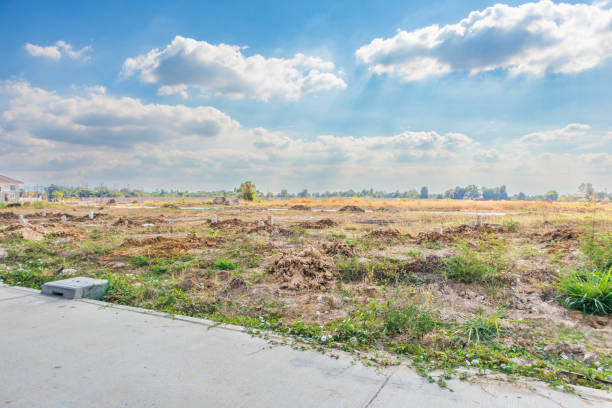
While investing in raw land eliminates traditional landlord headaches, it introduces a specific set of financial carrying costs and risks that can erode overall net returns if not managed properly. The most prominent limitation of unimproved property is its negative cash flow profile.
Unlike cash-flowing rental apartments, vacant land produces zero income while demanding regular financial outlays for annual property taxes, local municipal fees, and periodic site maintenance such as brush clearing or weed abatement. If an investor uses bank financing to acquire land, monthly principal and interest payments further increase these carrying expenses. Holding a non-income-producing parcel for fifteen or twenty years means compounding these annual carrying costs, which reduces overall annualized investment returns upon eventual sale.
Furthermore, raw land represents an illiquid asset class. Selling a parcel of unimproved acreage at full market value often takes months or even years, especially during economic downturns when real estate development activity slows. Investors facing sudden liquidity demands may be forced to offer substantial price discounts to execute a rapid sale. Finally, securing traditional bank financing for raw land is notoriously difficult, requiring higher down payments and elevated interest rates compared to standard residential mortgages.
Comparative Matrix of Real Estate Asset Class Performance
To evaluate whether vacant land aligns with your broader investment portfolio, it is helpful to compare its financial and operational characteristics directly against other popular real estate asset classes. The table below compares raw land, residential rental property, and commercial real estate across key performance dimensions:
| Asset Performance Dimension | Raw Vacant Land | Residential Rental Units | Commercial Real Estate |
| Initial Capital Barrier | Generally low to moderate; lower entry price points | Moderate; requires standard residential mortgages | High; requires substantial capital and commercial loans |
| Ongoing Cash Flow Yield | Zero to negative; generates no natural rental revenue | High; produces predictable monthly tenant rent | High to very high; offers structured multi-year leases |
| Operational Management | Extremely low; no tenants, structures, or maintenance | Moderate to high; demands active property management | High; requires professional facility management teams |
| Asset Appreciation Potential | Very high; scales exponentially in paths of urban growth | Moderate; driven by local housing market trends | Moderate to high; tied closely to tenant lease revenues |
| Market Liquidity Profile | Low; selling unimproved land requires extended time | High; strong secondary buyer market for homes | Moderate; dependent on local economic conditions |
Evaluating these distinct asset profiles allows investors to balance high-appreciation, low-maintenance vacant land with income-producing rental properties.
Core Economic Drivers That Force Land Value Appreciation
Substantial land appreciation is rarely accidental. Instead, it results from specific macroeconomic, demographic, and geographical growth drivers that push development demand toward specific parcels. Identifying these growth vectors early allows investors to acquire land before prices skyrocket.
Path of growth positioning represents the single most powerful driver of raw land value. Metropolitan areas naturally expand along major transportation arteries, highway interchanges, and utility corridors. Land situated three to five miles outside active suburban development zones often trades at agricultural prices. As housing subdivisions, retail shopping centers, and school districts expand outward, that same agricultural land transforms into prime suburban development acreage, resulting in massive valuation increases.
Local infrastructure expansion acts as another major catalyst for land appreciation. Municipal decisions to extend public water lines, expand regional wastewater treatment capacity, pave gravel access roads, or build new highway bypasses instantly unlock the development potential of surrounding acreage. Similarly, favorable zoning modifications, such as reclassifying agricultural land to high-density residential or commercial mixed-use, can increase land market value by orders of magnitude overnight.
Creative Income Strategies to Offset Holding Costs
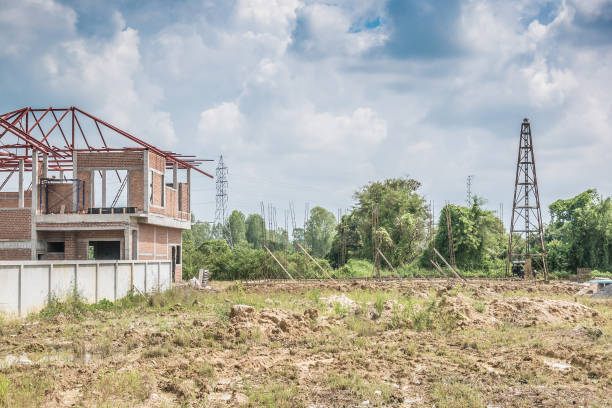
To overcome the traditional negative cash flow limitation of raw land, innovative investors deploy short-term land-use strategies designed to generate income while waiting for long-term capital appreciation. Generating operational revenue offsets annual property taxes and carrying costs, converting a negative-carry asset into a self-sustaining investment.
Leasing land for agricultural or resource production represents a popular cash-flow strategy for larger rural parcels. Local farmers frequently lease arable land for crop cultivation, livestock grazing, or hay production. While agricultural lease rates are modest, enrolling the property in active agricultural use provides a critical double benefit: it generates annual lease income and qualifies the parcel for current-use agricultural tax exemptions, lowering annual property tax bills by up to ninety percent.
Other creative short-term income strategies include leasing land to outdoor recreation enthusiasts for seasonal hunting leases, camping access, or equestrian pasture use. In suburban or industrial zones, vacant parcels can be leased for vehicle parking, equipment storage, outdoor material staging, or billboard placement. Additionally, land owners can sell timber rights or negotiate renewable energy land leases for solar panels or wind turbines, providing long-term lease payments without sacrificing underlying land ownership.
Comparative Breakdown of Cash Flow Strategies for Vacant Land
Implementing short-term land monetization strategies helps offset carrying expenses while preserving upside appreciation. The table below compares common interim land-use strategies, their implementation requirements, income potential, and primary risk factors:
| Interim Land Use Strategy | Implementation Requirements | Annual Income Potential | Primary Operational Risks |
| Agricultural / Grazing Leases | Arable soil, boundary fencing, basic water access | Low to moderate; provides major tax reductions | Weather dependencies and seasonal crop fluctuations |
| Billboard Advertising Leases | Prime frontage along high-traffic highway corridors | Moderate to high; long-term fixed lease contracts | Zoning restrictions and municipal signage bans |
| Cellular Tower Placement | Unobstructed elevated terrain or strategic location | High; secure multi-decade corporate leases | Strict telecommunications siting regulations |
| Solar Energy Ground Leases | Flat terrain near high-capacity electrical substations | High; predictable long-term utility contracts | Extensive environmental permitting delays |
| Equipment & Vehicle Storage | Security fencing, crushed gravel surface, security gate | Moderate; flexible short-term tenant rentals | Potential liability and localized surface pollution |
Selecting the right interim income model allows investors to eliminate net carrying costs while holding land for long-term appreciation.
Step-by-Step Strategy for Selecting High-Growth Land
Executing a successful long-term land investment strategy requires a disciplined, methodical selection process to avoid buying stagnant or unbuildable property. Following a structured analysis framework maximizes your probability of capturing high capital growth:
- Map Out Regional Metropolitan Growth Corridors: Study regional planning maps, transportation master plans, and recent commercial development permits to identify where suburban expansion is actively moving.
- Target Properties Directly in the Path of Growth: Concentrate search efforts on land situated just beyond active development margins along primary transportation routes.
- Verify Physical and Environmental Site Buildability: Conduct due diligence to ensure the parcel lacks severe wetlands, steep unbuildable slopes, or subterranean contamination that limits development.
- Confirm Utility Extension Options and Costs: Contact local water, sewer, and electric utility providers to establish proximity, capacity, and extension costs for the parcel.
- Analyze Local Zoning Rules and Rezoning Potential: Review comprehensive land-use plans to confirm that local planning authorities support higher-density development on the site.
- Establish an Interim Income Model: Secure an agricultural lease, storage arrangement, or recreational license to cover annual property taxes and holding costs.
- Maintain a Flexible Exit Horizon: Hold the parcel until market cycles peak, then execute an exit strategy through outright sale, owner financing, or joint-venture development.
Following this step-by-step investment methodology ensures that capital is deployed exclusively into parcels with strong appreciation drivers and manageable risk profiles.
Essential Risk Mitigation and Site Due Diligence Protocols
Investing in vacant land carries inherent physical and legal risks that can permanently destroy capital if ignored during the pre-acquisition inspection window. Thorough due diligence is mandatory before waiving contract contingencies.
Environmental constraints represent one of the most critical risk factors. Land that contains protected federal wetlands, designated critical habitats for endangered species, or severe soil contamination can be rendered completely unbuildable by regulatory agencies. Purchasing unbuildable land destroys market value and leaves the investor holding a permanently illiquid asset. Always commission a Phase I Environmental Site Assessment and a formal wetland delineation survey before completing a purchase.
Additionally, access rights and legal title defects must be verified. Land that lacks legally recorded access easements is landlocked, making it impossible to secure building permits or commercial resale buyers. Always work with a licensed land surveyor to confirm property boundary lines and engage a title company to ensure the title is free of ancient clouds, unrecorded mineral rights, or hidden tax liens.
Structuring High-Yield Exit Strategies for Vacant Land
The ultimate success of a long-term land investment depends on how effectively you execute your exit strategy when market conditions mature. Land investors are not limited to traditional cash sales; several alternative exit structures can maximize total financial returns.
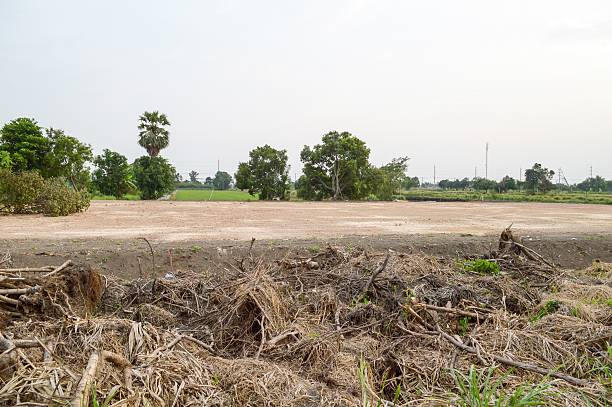
Selling land directly to real estate developers represents the standard exit path for parcels located in the path of growth. Homebuilders, commercial developers, and industrial operators pay premium prices for site-ready land that has been cleared of regulatory hurdles. To maximize purchase price, land investors can pre-entitle the property prior to sale by securing municipal rezoning approvals, site plan clearances, or preliminary subdivision plats, significantly increasing the land value without undertaking actual physical construction.
Another highly profitable exit strategy is seller financing, also known as owner financing or executing a land contract. Instead of demanding a full cash payout, the land investor acts as the bank, receiving a substantial cash down payment from the buyer and carrying a promissory note secured by a deed of trust. The buyer pays monthly principal and interest payments over five to fifteen years at attractive interest rates. Seller financing expands your prospective buyer pool, creates steady monthly cash flow, spreads capital gains tax liabilities over multiple tax years, and delivers high overall investment yields.
Conclusion
Vacant land can serve as an exceptional long-term investment vehicle for patient investors who understand how to navigate its unique operational dynamics. While raw land lacks immediate cash flow yields and requires ongoing carrying expenses, its complete lack of structural maintenance, finite global supply, and massive appreciation potential along expanding growth corridors make it an unparalleled wealth-creation asset. By conducting thorough due diligence, selecting parcels directly in the path of municipal expansion, implementing interim cash flow strategies, and structuring strategic exits, you can harness raw land to build lasting capital value and strengthen your long-term financial portfolio.
Frequently Asked Questions
Is raw land safer than investing in stocks or residential rental properties?
Raw land carries lower operational management risks than residential rentals because there are no buildings to repair or tenants to manage, and it provides a physical asset that cannot be destroyed by market crashes. However, it is less liquid than stocks and produces no regular cash flow yield unless structured with interim leases or seller financing.
How do I finance a vacant land purchase if banks require high down payments?
Because conventional lenders view raw land as speculative, they often require thirty to fifty percent down payments with higher interest rates. Investors overcome this by utilizing seller financing, where the property owner finances the purchase directly, or by leveraging private equity, self-directed IRAs, or home equity loans from existing properties.
What does path of growth mean in land investing?
Path of growth refers to the predictable geographical direction in which a metropolitan region expands over time. It is driven by population increases, commercial development, highway extensions, and utility line expansions outward from urban centers into surrounding rural areas.
How can I lower property taxes on vacant land while holding it long term?
The most effective way to lower property taxes on vacant land is to enroll the parcel in a state agricultural, forestry, or conservation current-use program. Leasing the land to a local farmer for crop production or cattle grazing changes the tax assessment from speculative market value to low productivity value, reducing tax bills significantly.
What is seller financing and why is it popular with land investors?
Seller financing occurs when the land seller acts as the mortgage lender for the buyer. The buyer pays an upfront down payment and makes monthly principal and interest payments directly to the seller over an agreed term. It is popular because it creates reliable income from raw land, commands higher sale prices, and yields high interest returns.