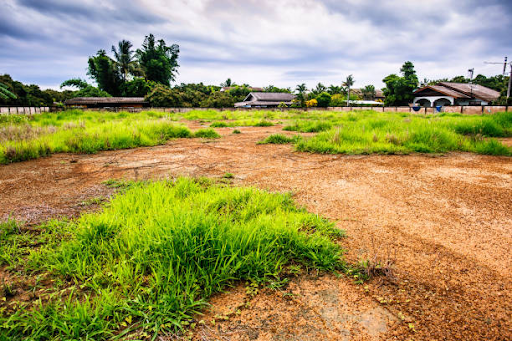
Evaluating raw land for investment potential requires looking beyond simple aesthetic appeal or broad geographical location. While a parcel may feature rolling hills, mature trees, or pleasant rural views, these surface characteristics do not guarantee capital appreciation or site buildability. Unimproved land is a complex asset class where true economic…

The relationship between population growth and land value expansion is one of the most fundamental principles in real estate economics. Unlike physical structures, consumer products, or industrial equipment, which can be manufactured in response to market demand, the Earth features a fixed physical supply of land. When regional populations expand…
Investing in vacant land is often promoted as a straightforward, low-maintenance real estate strategy. Unlike developed residential or commercial properties, raw land has no roofs to repair, no foundation leaks to fix, and no tenants to manage. However, assuming that unbuilt land is a risk-free asset class is a dangerous…
Evaluating land investment opportunities requires a methodical, multi-disciplinary approach that differs fundamentally from traditional real estate analysis. When purchasing improved assets like residential homes, office buildings, or industrial warehouses, investors rely on historical income statements, current tenant lease structures, and physical building inspections to establish asset value. Unimproved raw land…
Vacant land represents one of the most versatile asset classes in real estate, offering investors a wide spectrum of paths toward long-term wealth accumulation. However, assuming that all raw dirt behaves identically under market pressure is a costly mistake. Residential land and recreational land operate on vastly different economic fundamentals,…
Acquiring vacant land is one of the most reliable wealth-building strategies in real estate, yet treats raw dirt as a single asset class at your peril. Unimproved land varies wildly in terms of financial return profiles, regulatory barriers, physical characteristics, and capital holding requirements. A parcel of agricultural acreage sitting…
Land appreciation is one of the foundational drivers of wealth creation across global real estate markets. Unlike manufactured assets, consumer products, or physical structures that inevitably age and deteriorate, land possesses an intrinsic economic durability. While a residential house or commercial warehouse loses structural value over time due to wear,…
Land banking is a time-tested real estate investment strategy that involves purchasing undeveloped acreage in strategic locations, holding the property over an extended period, and selling it at a substantial profit once surrounding growth and development drive up its value. Wealthy families, institutional real estate funds, and experienced private investors…
Investing in vacant land represents one of the most foundational, yet widely misunderstood, wealth-building strategies in real estate. Unlike residential single-family homes or commercial multi-tenant buildings that produce immediate monthly rental yields, raw acreage is fundamentally a speculative capital appreciation asset. Land investors acquire physical property with the strategic expectation…
Buying vacant land requires a rigorous, methodical investigation process known as due diligence. Unlike developed residential or commercial properties that come with existing structures, utility hookups, and established boundaries, raw acreage presents a broad array of hidden physical, legal, financial, and environmental variables. A parcel of land might feature breathtaking…