
Securing a reliable, high-quality water supply represents one of the most vital technical prerequisites when evaluating vacant land for purchase. Whether acquiring raw acreage for a single-family home, a multi-lot residential subdivision, an agricultural venture, or a commercial enterprise, water availability directly controls property buildability, zoning options, development costs, and long-term asset value. When assessing unimproved real estate, land buyers encounter two distinct water supply options: private groundwater wells drilled on-site or public municipal water networks provided by local utility authorities.
While both options deliver potable water for daily domestic and commercial use, well water and municipal water operate under fundamentally different financial, legal, technical, and regulatory frameworks. Municipal water systems provide centralized utility infrastructure where water quality, pressure, and delivery are managed by a local government or private water company in exchange for recurring service fees and tap charges. Private water wells place total responsibility for water extraction, testing, filtration, system maintenance, and power resilience directly on the landowner. Understanding these differences, along with performing thorough technical due diligence prior to removing contract purchase contingencies, protects buyers from unexpected capital expenditures and ensures property development success.
The Operational Mechanics of Land Water Infrastructure
Evaluating raw land requires understanding how public water main networks and private groundwater extraction systems deliver potable water to a property building envelope.
Municipal water systems rely on extensive municipal infrastructure, including reservoir dams, deep municipal production wells, regional water treatment plants, pumping stations, and elevated storage towers. Water is treated using industrial chlorination, fluoridation, and filtration before being distributed under continuous pressure through underground main lines within public road rights-of-way. To access this supply, a developer or homebuilder installs a private service line running from the building foundation to the municipal water main, where a water meter records volume usage for monthly or quarterly billing.
Municipal Water Flow: Regional Reservoir/Well -> Central Treatment Plant -> Main Line -> Service Meter -> Building
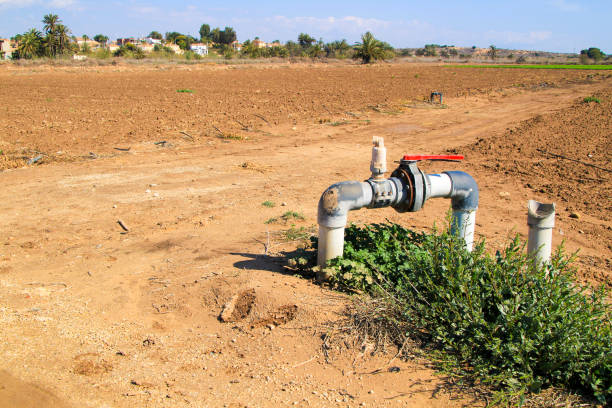
Private well water systems operate as independent on-site utilities designed to extract groundwater from subsurface geological aquifers located directly beneath the parcel. A licensed well drilling contractor uses specialized rotary rigs to bore a vertical shaft through soil and bedrock layers until reaching a water-bearing aquifer. Steel or PVC casing lines the upper borehole to prevent soil collapse, while a submerged electrical pump at the bottom of the well pushes water up through underground piping into a pressure tank inside the home. The pressure tank maintains steady household water pressure and triggers the well pump when tap usage depletes internal water reserves.
Well Water Flow: Subsurface Aquifer -> Submersible Pump -> Underground Pipe -> Pressure Tank -> Filtration -> Building
Upfront Capital Investment vs. Long-Term Operating Expenditures
The financial profiles of municipal water connections and private groundwater wells differ significantly regarding upfront installation fees, ongoing operating budgets, and long-term capital reserve requirements.
Connecting vacant land to a public municipal water line involves predictable upfront fees dictated by local utility fee schedules. These costs include municipal water tap connection fees, meter installation charges, utility inspection costs, and excavation fees to trench service lines across property lines or under public roadways. In cases where public water mains reside hundreds of feet from a property line, land buyers must fund off-site main line extensions, which can significantly increase upfront development budgets. Once connected, ongoing costs consist of fixed monthly utility base fees alongside variable consumption charges based on total gallons consumed.
Installing a private groundwater well on vacant land involves upfront capital costs driven by subsurface geology and local aquifer depth. Drilling costs are typically calculated per foot of borehole depth, meaning deep bedrock wells incur higher capital expenses than shallow alluvial wells. Total well installation budgets include drilling fees, casing materials, submersible pump installation, pressure tank setup, electrical wiring, and water quality filtration equipment. Although private well systems eliminate monthly water bills, property owners assume complete financial responsibility for electrical power running the pump, periodic water testing, filter replacements, and eventual pump or pressure tank replacements.
Comparative Matrix: Municipal Water vs. Private Groundwater Wells
Organizing the operational, financial, and regulatory differences between public municipal water and private groundwater wells provides essential context for land buyers:
| System Parameter | Public Municipal Water System | Private On-Site Groundwater Well |
| Primary Oversight Body | Municipal water authority or regional public utility district | County health department and state environmental protection agency |
| Upfront Capital Costs | Municipal tap fees, meter charges, service lateral trenching | Drilling per foot, well casing, submersible pump, pressure tank |
| Ongoing Operating Costs | Monthly or quarterly utility bills based on water consumption | Zero utility bills; electrical usage for pump and system maintenance |
| Water Quality Oversight | Tested and treated continuously by municipal utility personnel | Annual water testing and filtration maintenance performed by owner |
Understanding these baseline functional trade-offs enables buyers to accurately align property selection with personal preference and long-term site development budgets.
Water Quality, Environmental Testing, and Filtration Requirements
Water quality directly impacts human health, plumbing longevity, appliance lifespan, and property resale desirability. The source of property water determines how quality is monitored and treated over time.
Municipal water supplies are legally bound by federal EPA guidelines under the Safe Drinking Water Act. Municipal utilities test raw water sources daily, treating supplies to eliminate harmful biological pathogens, sediment, dissolved heavy metals, and industrial chemicals before distribution. While municipal water is guaranteed to meet federal health standards, property owners often detect minor taste or chlorine odor variations. Additionally, aging municipal main distribution infrastructure or legacy lead service pipes can introduce secondary water contaminants, prompting some homeowners to install point-of-use carbon or reverse osmosis filtration systems.
Private well water quality depends entirely on localized subsurface geology and neighboring land-use practices. Unlike municipal water, private wells are completely unregulated after initial installation, leaving water quality monitoring up to the individual landowner. Groundwater aquifers can contain natural mineral contaminants, such as iron, manganese, radon, arsenic, and hard calcium deposits, which stain fixtures and shorten appliance lifespans. Furthermore, agricultural runoff, leaking underground fuel storage tanks, or failing septic systems on neighboring properties can introduce elevated nitrates, volatile organic compounds, or coliform bacteria into shallow wells, making pre-acquisition water quality testing a critical due diligence task.
Physical Constraints, Well Yield, and Fire Flow Capabilities
The physical capacity of a water system dictates structural usage options, agricultural activities, landscape irrigation, and fire protection measures on vacant land.
Municipal water systems deliver high, regulated water pressure alongside continuous supply volume backed by large municipal treatment facilities and elevated storage towers. This high flow capacity simplifies commercial development, multi-unit residential projects, and high-density subdivisions. Crucially, public water systems supply high dynamic fire flow pressure through dedicated hydrants along public road frontages, satisfying local municipal fire codes and reducing homeowner insurance premiums.
Private groundwater wells depend on natural aquifer yield, measured in gallons per minute (GPM), alongside static water levels and recharge rates. A residential private well typically requires a minimum continuous yield of three to five GPM to support a standard family household. Low-yield wells producing fewer than three GPM require installing large underground storage holding tanks and booster pump systems to meet peak household demand. Furthermore, private well systems cannot provide municipal-grade fire flow capacity, requiring homebuilders in rural districts to install residential fire sprinkler systems or private fire suppression holding tanks to comply with local building regulations.

Technical Diagnostic Checklist for Vacant Land Water Systems
Evaluating water supply options during site due diligence protects land buyers against hidden site liabilities. The table below outlines technical indicators, underlying system constraints, and essential verification steps:
| System Warning Indicator | Underlying Technical Factor | Recommended Due Diligence Verification Action |
| Distant Municipal Main | High off-site utility line extension costs and easement hurdles | Request formal utility availability letter with exact main distance and tap fees |
| Low Neighboring Well Yields | Deep water table or low-porosity subsurface rock formations | Audit state drilling log databases for adjacent property depth and flow rates |
| High Mineral or Hard Water | High dissolved iron, manganese, or calcium levels in groundwater | Perform comprehensive laboratory water potability test during due diligence |
| Seasonal Water Level Drop | Fluctuating water table levels during dry summer months | Conduct a sustained well yield pump test to measure recovery performance |
Executing these field diagnostic checks safeguards land buyers against unbudgeted infrastructure costs and confirms long-term property buildability.
Reliability, Power Outages, and Climate Resilience
Long-term water security requires assessing how municipal water networks and private groundwater wells perform during extreme weather events, natural disasters, and electrical grid power failures.
Municipal water networks feature built-in operational redundancy, commercial back-up generators, and auxiliary storage facilities designed to maintain line pressure during regional power outages. Unless physical main lines rupture during ground movement or major freezing events, municipal water continues flowing to household taps during standard storm disruptions. However, municipal systems remain susceptible to regional contamination events, main line breaks, treatment plant mechanical failures, or severe municipal droughts that trigger mandatory water conservation measures.
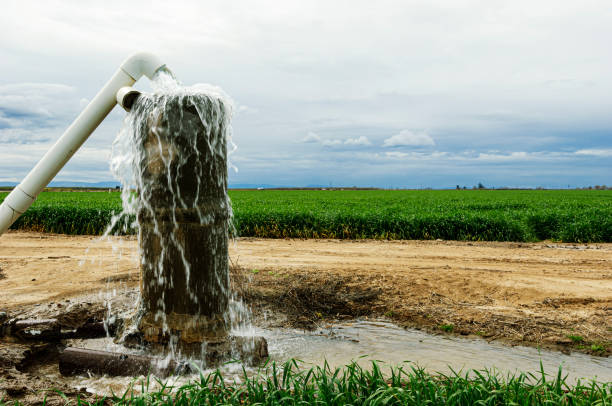
Private well water systems rely on electricity to power submersible pumps and pressurized delivery systems. During a localized or regional power grid failure, a private well pump ceases operating immediately once the internal pressure tank empties, leaving the property without running water. To maintain water resilience, private well owners must invest in secondary power systems, such as dual-fuel portable generators, automated standby home generators, or solar power battery arrays. Despite power vulnerability, private wells offer independence from municipal usage bans, municipal utility rate hikes, and off-site utility disruptions.
Step-by-Step Water Verification Protocol for Land Buyers
Following a structured water verification protocol enables vacant land buyers to evaluate water infrastructure options, manage professional consulting expenses, and minimize financial risk:
- Confirm Primary Water Source Availability: Review local zoning maps, utility service boundary databases, and tax disclosures to determine if public municipal water borders the parcel or if a private well is required.
- Request Utility Availability and Fee Schedules: If public water is available, submit a formal request to the municipal water authority to verify line sizes, static pressure, tap fees, and main extension requirements.
- Audit Regional Well Completion Logs: If relying on well water, review state geological survey databases for historical drilling records of neighboring parcels to estimate average well depths and flow yields.
- Draft Purchase Contracts with Water Contingencies: Structure land purchase contracts with explicit technical contingencies allowing sufficient time for well drilling, pump yield testing, or municipal utility verification.
- Execute Subsurface Well Drilling or Flow Yield Tests: Hire a licensed well drilling contractor to drill a test well or perform a sustained pump test on an existing well to verify gallons per minute (GPM) production.
- Perform Comprehensive Laboratory Water Potability Testing: Collect water samples from existing or test wells and submit them to a certified state laboratory to screen for bacteria, heavy metals, nitrates, and mineral hardness.
- Integrate Complete Water Infrastructure Costs into Budgeting: Incorporate off-site main extension costs, tap connection fees, drilling expenses, and water filtration equipment into your total development pro forma.
Adhering to this sequential verification protocol protects earnest money deposits and confirms complete site feasibility before finalizing a land acquisition.
Assembling Your Technical and Legal Advisory Team
Navigating the technical, legal, and environmental complexities of securing water for vacant land requires partnering with qualified local experts familiar with regional geology and municipal policies.
Your due diligence advisory team should be led by an experienced real estate attorney and a licensed civil engineer. The real estate attorney examines title commitments, audits recorded utility easements, reviews water rights legal doctrines, and drafts protective contract contingencies. The civil engineer evaluates site topography, calculates required service line pipe sizing, assesses municipal water main pressure, and designs on-site utility layouts for municipal planning board approvals.
Essential technical field specialists include licensed well drilling contractors, certified water testing laboratories, professional land surveyors, and environmental consultants. Certified well drillers provide expert knowledge regarding local aquifer depth, subsurface rock conditions, pump sizing, and drilling costs. Water testing laboratories provide accurate chemical potability reports, while land surveyors map legal property lines and utility rights-of-way. Working alongside experienced local professionals ensures your property acquisition remains compliant, cost-effective, and fully buildable.
Conclusion
Securing a reliable water supply is a fundamental requirement when buying vacant land. Public municipal water provides continuous delivery, high flow pressure, built-in quality monitoring, and fire protection capabilities, balanced against tap connection fees and monthly utility bills. Private groundwater wells offer complete water independence, zero monthly utility charges, and long-term control, balanced against upfront drilling capital, private system maintenance, power dependence, and ongoing water quality testing responsibilities. By executing a disciplined due diligence process, auditing neighbor well logs, performing comprehensive laboratory potability tests, calculating full main extension or drilling costs, and partnering with experienced local attorneys and engineers, land buyers can evaluate water infrastructure options with complete confidence and protect their long-term real estate investments.
Frequently Asked Questions
How do I know if public water is available at a vacant land parcel?
Contact the local municipal water authority or public works department to request a formal utility availability letter. Utility personnel can verify if a water main runs along the property frontage, confirm static water pressure, and outline applicable connection tap fees.
What is a good yield in gallons per minute (GPM) for a private well?
A standard single-family residential home requires a minimum continuous well yield of three to five gallons per minute (GPM). Wells producing lower yields often require installing auxiliary storage holding tanks and booster pump systems to handle peak household water demand.
How much does it cost to drill a private water well on vacant land?
Well drilling costs vary widely based on subsurface geology, casing requirements, and depth to the water-bearing aquifer. Total installation expenses typically range from five thousand to over fifteen thousand dollars, including drilling per foot, well casing, submersible pump, pressure tank, and basic electrical hookups.
What happens to a private water well during a electrical power outage?
Because private well pumps rely on electrical power to extract groundwater and pressurize the system, a well pump stops working during a power outage once the pressure tank empties. Well owners can maintain continuous water supply during outages by connecting well pumps to auxiliary generators or battery backup systems.
What contaminants should I test for in private well water?
When testing private well water during due diligence, run a comprehensive laboratory potability panel screening for coliform bacteria, nitrates, nitrites, lead, arsenic, iron, manganese, pH levels, total dissolved solids (TDS), and local agricultural or industrial chemicals.