
Acquiring vacant land is one of the most reliable wealth-building strategies in real estate, yet treats raw dirt as a single asset class at your peril. Unimproved land varies wildly in terms of financial return profiles, regulatory barriers, physical characteristics, and capital holding requirements. A parcel of agricultural acreage sitting miles outside a growing metropolitan area operates under completely different economic rules than an infill residential lot inside an established neighborhood or a commercial parcel positioned along a major interstate corridor. Choosing the wrong category of land for your portfolio can result in an illiquid asset that drains capital through property taxes without delivering meaningful appreciation.
Selecting the best type of land for a long-term investment requires matching your financial resources, risk tolerance, and investment horizon with specific land categories. Success depends on understanding how different land classifications generate returns, whether through passive long-term appreciation, active municipal entitlements, or interim operational lease income. Evaluating the primary types of land investments, analyzing their distinct risk-return profiles, and executing thorough due diligence allows you to deploy capital effectively, minimize annual holding costs, and secure high-performing real estate assets.
Path-of-Growth Agricultural and Rural Acreage
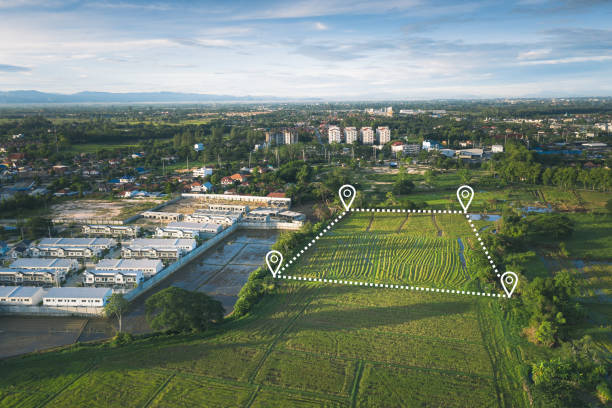
Path-of-growth agricultural land represents one of the most popular and financially rewarding land investment strategies. This model involves purchasing working farmland, pasture, or rural acreage located directly in the outer expansion vector of a growing metropolitan region.
The core strength of path-of-growth acreage lies in its dual-value mechanism. While the land sits on the rural perimeter, it functions as a working agricultural asset that can be leased to local farmers or livestock managers. This operational lease income covers annual property tax liabilities and liability insurance premiums, eliminating negative cash flow during your holding period. Furthermore, agricultural land qualifies for preferential current-use tax assessments, which reduces annual property tax bills by seventy to ninety percent compared to fully developed real estate.
As population growth, housing demand, and commercial development expand outward from the city center, the functional utility of the land transforms. What began as a low-cost agricultural parcel eventually becomes prime inventory for residential subdivisions, logistics parks, or retail centers. Buying raw acreage wholesale miles ahead of active development and holding it until master-plan developers arrive provides exceptional capital appreciation over ten to twenty-year investment horizons.
Suburban Infill and Edge Development Lots
Suburban infill and edge development parcels sit much closer to active civil infrastructure and populated residential communities. Edge land refers to parcels located immediately adjacent to current suburban housing developments, while infill land consists of vacant, un-built lots within established residential neighborhoods.
Investing in suburban edge and infill land features significantly shorter holding periods compared to remote rural acreage, typically ranging from three to eight years. Because suburban infrastructure like paved access roads, municipal water mains, electrical grids, and sanitary sewer trunks already borders the property, the risk associated with site utility extension costs is low. Homebuilders, private contractors, and regional developers constantly search for buildable infill and edge sites to satisfy immediate housing demand without incurring long utility buildouts.
However, these benefits come with higher entry pricing per square foot and elevated annual holding expenses. Suburban land carries higher property tax assessments because local tax authorities evaluate the parcel at or near market development value rather than discounted agricultural rates. Additionally, suburban infill development involves navigating strict local zoning boards, neighborhood opposition, building height limits, and complex setback requirements.
Comparative Matrix of Land Investment Categories
Evaluating the primary types of land investments clarifies how capital requirements, holding horizons, and cash flow potential differ across classifications. The table below compares four major land investment categories across key operational criteria:
| Land Investment Category | Capital & Entry Price | Typical Holding Horizon | Cash Flow Potential | Primary Risk Factors |
| Path-of-Growth Agricultural | Low to moderate per acre | Long-term; 10 to 20 years | Moderate; agricultural leases | Path shift; prolonged holding time |
| Suburban Edge & Infill | Moderate to high per lot | Short to medium; 3 to 8 years | Low to zero; non-operational | High holding taxes; zoning pushback |
| Commercial Corridor Sites | High to very high per foot | Medium-term; 5 to 10 years | High potential; ground leases | Traffic pattern shifts; recessions |
| Recreational & Timberland | Low to moderate per acre | Long-term; 10 to 30 years | Periodic; timber harvesting | Forest fires; access issues; distance |
Comparing these categories enables you to select the precise land asset type that aligns with your capital reserves and investment timeline.
Commercial and Industrial Corridor Land
Commercial and industrial land consists of parcels situated along major highways, interstate interchanges, logistics hubs, or primary arterial thoroughfares within expanding commercial districts. This land type targets business end-users, including retail centers, fast-food franchises, gas station plazas, self-storage facilities, and industrial warehousing hubs.
Commercial corridor land commands some of the highest prices per square foot in the land market, but it offers unmatched appreciation potential and financial flexibility. A well-located corner lot along a high-traffic highway interchange possesses intrinsic value that remains high regardless of broader housing market fluctuations. Businesses are willing to pay top dollar for high-visibility sites that offer easy vehicular access and strong daily traffic counts.
Furthermore, commercial land provides excellent interim income opportunities through long-term ground leases. Commercial developers or corporate franchises frequently prefer executing multi-decade ground leases where they construct their own buildings on your land while paying you guaranteed monthly ground rent. This structure provides passive income, shifts building maintenance obligations to the tenant, and allows you to retain ultimate ownership of the underlying real estate asset.
Recreational Land and Working Timberland
Recreational land and commercial timberland represent specialized real estate investments that appeal to buyers seeking physical land utility, resource income, and long-term capital preservation far away from urban centers.
Working timberland involves purchasing forested acreage managed for ongoing wood production. Managed forests generate periodic cash flow through selective timber harvests, providing lump-sum capital returns every few years without requiring you to clear-cut the entire property. Additionally, timberland serves as an effective hedge against inflation, as wood product prices typically rise alongside broader commodity price cycles. Specialized forestry tax credits and conservation programs further enhance total investment performance.
Recreational land, such as hunting acreage, waterfront properties, or mountain retreat tracts, derives its value from natural amenities, scenic views, and recreational utility. While recreational land does not experience the rapid appreciation driven by suburban sprawl, it remains a stable store of value that experiences consistent demand from high-net-worth buyers seeking lifestyle properties. Investors can monetize recreational land by leasing seasonal hunting rights, establishing off-grid campsites, or enrolling parcels in carbon credit offset programs.
Comparative Breakdown of Income Generation and Tax Strategies
Different land asset types offer distinct strategies for generating interim revenue and minimizing annual holding tax obligations. The table below outlines income sources and tax management tactics across major land categories:
| Land Asset Classification | Primary Interim Income Options | Favorable Tax Mechanisms | Ideal Exit Buyer Profile |
| Agricultural Farmland | Crop leases, livestock grazing rent | Current-use agricultural assessment | Residential & commercial master builders |
| Suburban Infill Lots | Temporary vehicle or equipment storage | Challenge high municipal tax assessments | Custom homebuilders & private buyers |
| Commercial Highway Sites | Billboard leases, commercial ground rent | 1031 tax-deferred exchanges | Retail chains & industrial developers |
| Managed Timberland | Selective timber sales, hunting leases | Forestry conservation tax programs | Institutional timber funds & conservationists |
Utilizing these monetization and tax reduction strategies protects your profit margins throughout multi-year holding periods.
Industrial Logistics and Energy Production Land
As global supply chains expand and renewable energy initiatives grow, specialized industrial and energy-focused land investments have emerged as lucrative opportunities for real estate investors.
Industrial logistics land includes acreage located near major freight airports, rail yards, maritime ports, and interstate trucking corridors. The rapid expansion of e-commerce and regional distribution networks has created massive demand for large, flat, well-located industrial land parcels suitable for fulfillment centers, truck parking facilities, and outdoor material storage yards. Industrial land often features streamlined municipal permitting processes because local governments welcome the employment opportunities and tax revenues that industrial parks generate.
Energy production land involves acquiring acreage suitable for solar farms, wind turbine installations, or electrical battery storage facilities. Renewable energy developers seek large, flat tracts of land with direct proximity to high-voltage electrical transmission lines and utility substations. Executing twenty to thirty-year utility-scale solar ground leases provides landowners with guaranteed, index-linked annual rental income that far exceeds traditional agricultural lease yields.
Step-by-Step Selection Process for Choosing the Right Land Asset
To select the ideal land asset type for your investment portfolio, execute a disciplined, step-by-step evaluation process before deploying capital:
- Establish Your Financial Horizon and Liquidity Needs: Determine whether your capital can remain locked in an illiquid asset for twenty years or if you require an exit within five years.
- Audit Regional Population and Infrastructure Growth: Study state transportation plans, highway expansion routes, and regional employment data to identify active growth vectors.
- Select a Target Land Classification: Match your budget and investment timeline with agricultural, suburban, commercial, timber, or energy-focused land.
- Inspect Physical and Environmental Site Characteristics: Perform soil percolation tests, order topographic contour maps, and verify the absence of regulated wetlands or contamination.
- Verify Legal Road Access and Utility Availability: Ensure the parcel possesses recorded legal access to public right-of-ways and confirm proximity to water, sewer, and power grids.
- Implement Interim Revenue and Tax Reduction Models: Enroll the parcel in agricultural current-use programs or execute commercial leases to cover annual property taxes.
- Formulate a Clear Exit and Distribution Plan: Identify target end-buyers, such as homebuilders, commercial developers, or institutional timber funds, before closing.
Following this structured step-by-step approach aligns your property selections with verified market demand and clear financial objectives.
Key Physical and Regulatory Risk Factors Across Land Types
Each land investment category carries unique physical, legal, and environmental risks that can limit development feasibility and reduce total capital appreciation if left unchecked during due diligence.
Physical topography and soil composition represent major cost variables across all land types. Parcels featuring steep slopes, rocky outcroppings, low-lying floodplains, or high water tables require extensive civil engineering and earthwork, which directly reduces what a developer will pay for the site. Furthermore, environmental constraints such as protected wetlands regulated under the Clean Water Act or critical wildlife habitats can restrict building to a small fraction of the total acreage, turning a large tract into an unbuildable parcel.
Regulatory risks also vary by land type. Suburban and residential infill sites face strict municipal zoning boards, architectural review committees, density caps, and potential neighborhood opposition. Commercial corridor sites require verifying curb-cut permissions, traffic deceleration lane mandates, and median break access with state transportation departments. Far-off rural acreage carries the risk that municipal growth may pivot in another direction, extending your required holding horizon by decades.
Assembling Your Specialized Land Investment Team
Navigating the complexities of different land categories requires building a multidisciplinary team of real estate and engineering professionals. Relying on general residential agents or basic property inspectors often results in missed site flaws and inaccurate financial projections.
Your due diligence team should include a specialized land broker who understands regional path-of-growth trends, price-per-acre metrics, and local land transaction histories. Retain a qualified real estate attorney to evaluate title commitments, draft purchase agreements, verify recorded legal access easements, and review commercial lease structures.
Additionally, partner with civil engineering firms, licensed land surveyors, and environmental consultants. A civil engineer evaluates site grading requirements, stormwater management feasibility, and utility connection costs, while a surveyor marks exact physical boundaries and identifies hidden property line encroachments. An environmental professional conducts Phase I Environmental Site Assessments and wetland delineations to confirm the land is free from toxic contamination and regulatory building restrictions.
Conclusion
Determining the best type of land for a long-term investment depends on aligning your financial resources, risk tolerance, and investment horizon with the right land asset class. Path-of-growth agricultural acreage offers exceptional long-term appreciation for patient investors, while suburban infill lots provide shorter holding periods and immediate building demand. Commercial corridor sites deliver high visibility and lucrative ground lease potential, whereas timberland and recreational acreage offer stable capital preservation combined with resource income. By conducting thorough due diligence, implementing interim monetization strategies to cover annual carrying costs, and matching land selections with documented path-of-growth trends, you can build a resilient, high-performing land portfolio that delivers long-term wealth accumulation.
Frequently Asked Questions
What type of land offers the lowest entry price for beginner investors?
Path-of-growth agricultural land and rural timberland offer the lowest entry purchase prices per acre. Because these parcels sit farther outside active municipal boundaries, initial acquisition costs remain low, making them accessible for individual investors seeking long-term capital appreciation.
What is a commercial ground lease and how does it work?
A commercial ground lease is an agreement where a landowner leases raw land to a tenant, such as a retail chain or corporate franchise, for a long term ranging from twenty to ninety-nine years. The tenant constructs and owns the physical building on the site, while paying regular monthly ground rent to the landowner.
How do I know if agricultural land is in the path of growth?
You can verify if agricultural land sits in the path of growth by studying municipal master plans, state department of transportation highway expansion plans, and utility district sewer expansion budgets. Additionally, monitor regional population influxes, school district acquisitions, and corporate job creation trends moving outward from the city center.
Why is suburban infill land considered higher risk regarding holding costs?
Suburban infill land carries higher holding cost risks because local county tax assessors evaluate the property at or near market development value rather than discounted agricultural current-use rates. This results in significantly higher annual property tax bills that must be paid out-of-pocket if the land produces no interim income.
Can I build on land that contains protected wetlands?
Building on land containing protected wetlands is strictly regulated under federal and state clean water laws. While you can usually build on the dry, upland portions of the parcel, filling or altering designated wetland areas requires securing complex, expensive compensatory mitigation permits, which can limit the total buildable site acreage.