
Acquiring undeveloped land offers exceptional potential for real estate developers, custom homebuilders, and long-term land investors. The visual appeal of raw acreage, such as open fields, mature timber, and rolling hills, often creates a compelling first impression. However, visual aesthetics do not guarantee property functionality or buildability. One of the most critical elements dictating whether a parcel of vacant land can support real estate development is the availability, capacity, legal accessibility, and installation cost of utility infrastructure.
Failing to verify utility infrastructure during the pre-acquisition due diligence period creates substantial financial risk. A parcel purchased at a competitive per-acre price can quickly become financially unviable if bringing essential utilities to the site requires hundreds of thousands of dollars in off-site main extensions, utility easement acquisitions, complex rock trenching, or specialized environmental permits. Establishing a structured, methodical utility verification protocol enables land buyers to accurately calculate site development budgets, avoid unbudgeted capital expenditures, and ensure property buildability before finalizing a land purchase.
The Strategic Importance of Pre-Acquisition Utility Due Diligence
Utility infrastructure represents the lifeblood of real estate development. Without secure access to potable water, wastewater management, electrical power, telecommunications, and heating fuel, unimproved land cannot legally or practically support residential dwellings, commercial facilities, or industrial operations.
Understanding utility availability requires distinguishing between physical proximity and legal, operational capacity. A utility line running adjacent to a parcel along a public road frontage does not automatically guarantee permission to connect. Municipal utility authorities may enforce strict connection moratoriums, allocation caps, or steep impact fees due to treatment plant constraints. Conversely, a parcel located far from public utility infrastructure requires evaluating on-site options, such as private drinking wells and subsurface septic systems, which are governed by local health department environmental rules. Conducting comprehensive utility due diligence during the contract contingency period safeguards earnest money deposits and verifies project feasibility.
Potable Water Systems: Public Mains vs. Private Water Wells
Securing a reliable, high-quality potable water supply is the primary utility requirement for any land development project. Water supply systems generally fall into two categories: municipal public water systems and individual private groundwater wells.
When public water service is available near the property, buyers must verify system pressure, main pipe diameter, and connection rights with the local public water utility. Connecting to a public water main requires paying municipal tap fees, meter installation charges, and potential main extension costs if the pipe does not directly border the building site. Furthermore, commercial developments and high-density residential subdivisions require verified water volume and dynamic pressure to satisfy local municipal fire flow requirements, which mandate dedicated high-pressure fire hydrants.
| Water System Category | Key Infrastructure Variables | Critical Due Diligence Verification Action |
| Public Municipal Water | Main line proximity, pipe diameter, system water pressure, tap fees | Request formal utility availability letter and verify fire flow capacity |
| Private Groundwater Well | Aquifer depth, seasonal water yield, static water level, filtration | Review local well drilling logs and conduct hydrogeological water quality tests |
In rural or suburban areas lacking public water service, land buyers must rely on private groundwater wells. Well feasibility depends on subsurface geology and localized aquifer depth. Before purchasing land reliant on private wells, buyers should review historical well completion reports from adjacent properties, verify minimum flow rates (measured in gallons per minute), and perform laboratory water testing to check for contaminants such as heavy metals, nitrates, or bacterial pollution.
Wastewater Management: Public Sanitary Sewer vs. On-Site Septic Systems
Disposing of domestic and commercial wastewater safely is a legal and environmental requirement enforced by municipal authorities, county health departments, and state environmental protection agencies.
Connecting to a public sanitary sewer system represents the most straightforward wastewater solution for high-density residential and commercial projects. Public sewer verification requires checking line invert elevations to confirm that wastewater can flow from the property via gravity. If a parcel sits lower than the municipal sewer main, the developer must install a specialized lift station and pressurized force main, adding significant electrical and pump maintenance expenses. Furthermore, buyers must verify that the municipal wastewater treatment plant has unallocated capacity to accept additional sewer connections.
Public Sewer Feasibility = Invert Elevation Check + Gravity Flow Line Verification + Municipal Plant Capacity
When public sanitary sewer lines are inaccessible, wastewater management requires installing an Onsite Wastewater Treatment System (OWTS), commonly known as a septic system. Septic system feasibility depends entirely on subsurface soil characteristics and seasonal groundwater levels.
| Wastewater System Category | Key Infrastructure Variables | Critical Due Diligence Verification Action |
| Public Sanitary Sewer | Main invert elevation, gravity vs. force main, plant treatment capacity | Review municipal sewer capacity maps and calculate sewer impact fees |
| On-Site Septic (OWTS) | Soil percolation rates, soil horizon depth, seasonal high water table | Perform deep hole observation digs and perc testing with licensed evaluator |
Achieving health department septic approval requires conducting deep observation pit excavations and soil percolation testing with a licensed soil evaluator. If testing reveals tight clay soils, shallow bedrock, or elevated seasonal water tables, traditional gravity septic systems will be rejected. In these challenging conditions, a licensed engineer must design advanced systems, such as mounded disposal fields or pressurized shallow narrow drainfields, which increase site preparation costs significantly.
Electrical Power Infrastructure and Grid Connection Dynamics
Electrical power is indispensable for modern land usage, powering structural systems, well pumps, heating and cooling units, construction tools, and digital communications infrastructure.
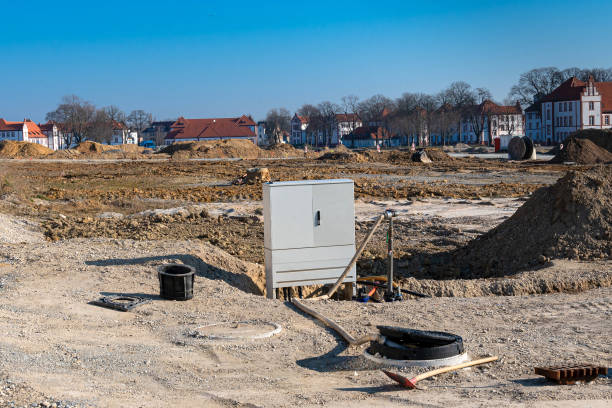
Evaluating electrical utility availability requires determining the exact distance from the proposed building envelope to the nearest existing electrical distribution power line. Local electric utility cooperatives and investor-owned power companies typically establish line extension policies that define how much overhead or underground power line they will construct at their own expense before charging the land buyer. Extensions exceeding standard allowance distances require the buyer to pay per-foot construction fees for utility poles, transformers, trenching, and underground conduit installation.
Furthermore, buyers must verify grid capacity and service type. While standard residential homes require single-phase electrical service, commercial facilities, agricultural irrigation pumps, and industrial operations require high-voltage three-phase power. If three-phase power is not available along the fronting roadway, extending lines from the nearest three-phase circuit can incur massive capital expenses. Coordinating with the electric utility engineering department early in the contract due diligence phase prevents unbudgeted site energization costs.
Telecommunications: Fiber Optic, Cable, and Broadband Connectivity
In modern real estate markets, access to high-speed broadband internet and telecommunications infrastructure has shifted from an optional luxury to an essential utility requirement. Homeowners, remote workers, and commercial tenants view high-speed connectivity as a critical factor when choosing real estate locations.
Land buyers must investigate available service providers and transmission media near the parcel. High-speed fiber optic cables and coaxial cable networks provide the fastest, most reliable internet speeds, but their coverage is often restricted to urban and suburban corridors. Extending fiber optic or cable lines down long rural private roads can cost thousands of dollars per mile, making early verification with internet service providers vital.
In remote rural areas where physical cable infrastructure is absent, buyers must evaluate alternative wireless solutions, such as fixed wireless broadband, satellite internet services, or cellular data networks. When relying on cellular or fixed wireless services, buyers should conduct on-site field testing to verify signal strength, download and upload speeds, and latency during peak usage hours. Securing reliable telecommunications access enhances property resale marketability and long-term equity value.
Heating Fuel Systems: Natural Gas Mains vs. On-Site Storage Solutions
Heating fuel infrastructure supports indoor climate control, hot water generation, and cooking appliances. The availability of heating fuel options directly impacts initial construction budgets and long-term utility operating expenses.
Natural gas is widely considered the most cost-effective and convenient heating fuel for residential and commercial development. Accessing natural gas requires a distribution main operating along the adjacent public roadway. Buyers should contact the local natural gas utility company to confirm main proximity, gas pressure, service pipe sizing, and connection costs. In many expanding suburban districts, natural gas utilities will extend service lines free of charge if projected usage volume satisfies internal financial return metrics.
Where natural gas main infrastructure is unavailable, land buyers must utilize on-site heating fuel storage solutions, such as liquefied petroleum gas (propane) tanks or heating oil systems. Utilizing propane requires allocating space on the building envelope for above-ground or underground storage tanks that comply with local municipal setback rules and fire code clearances. Additionally, buyers must confirm that local fuel delivery trucks can safely access the property year-round via existing road infrastructure.
Stormwater Management, Surface Drainage, and Runoff Control
While not a traditional supply utility, stormwater management infrastructure represents a crucial utility-adjacent consideration enforced by municipal engineering departments and state environmental protection agencies.
Developing raw land increases impervious surface coverage, such as roofs, driveways, and parking areas, which prevents rainwater from naturally infiltrating the ground. Municipal regulations mandate that land developers design stormwater management systems to detain surface runoff on-site, ensuring post-development runoff rates do not exceed pre-development natural flow rates.
Stormwater Balance: Pre-Development Natural Runoff Rate = Post-Development Detained Runoff Rate
Stormwater management infrastructure includes surface detention ponds, underground retention vaults, vegetated swales, and culverts. On smaller residential parcels, managing surface runoff requires maintaining natural overland flow paths and installing catch basins. On larger commercial or subdivision projects, constructing engineered retention ponds consumes valuable buildable acreage and requires significant excavation capital. Evaluating natural site contours, soil drainage capacity, and local stormwater bylaws ensures that stormwater management requirements are factored into total site development costs.
Legal Rights, Utility Easements, and Access Franchises
Physical proximity to utility lines means little if a land buyer lacks legal authority to cross intervening properties or public rights-of-way to bring utilities to the building envelope. Verifying utility easements is a critical component of legal land due diligence.
Utility easements are legally recorded rights granted to utility companies or property owners allowing them to construct, operate, and maintain utility pipes, wires, and equipment across private land. When a parcel does not front directly on a public road where utility lines reside, the buyer must secure written, recorded utility easements across adjacent private properties. Acquiring utility easements from neighboring landowners often requires lengthy negotiations and financial compensation.
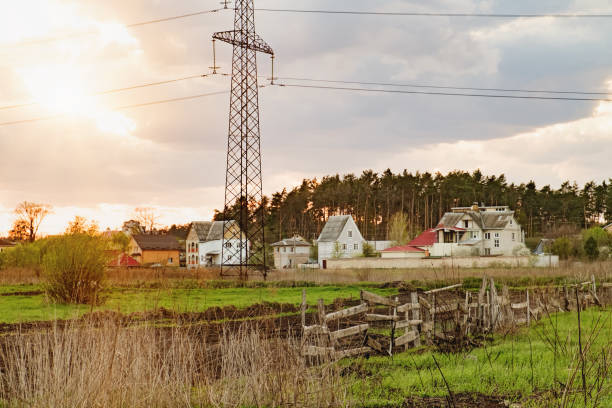
Furthermore, buyers must examine existing title commitments and property surveys to identify any burdensome utility easements running across their own target parcel. Recorded high-voltage electrical transmission easements, high-pressure natural gas pipeline easements, or municipal sewer main easements can establish non-buildable corridor strips across a property where constructing permanent structures, planting trees, or altering ground elevations is strictly prohibited. Engaging an experienced real estate attorney to examine title documents ensures property rights remain clear and protected.
Comprehensive Utility Verification Protocol for Land Buyers
Executing a structured, step-by-step utility verification protocol allows land buyers to evaluate site feasibility, control professional consultancy costs, and mitigate development risks efficiently:
- Identify Project Utility Demands and Building Envelope: Establish expected utility requirements based on intended property usage, such as single-family residential home, multi-family housing, or commercial facility.
- Request Official Utility Availability Letters: Contact local public water, sewer, electric, natural gas, and telecommunication providers to request formal written confirmation of line locations, system capacities, and connection fee schedules.
- Execute Property Title Search and Survey Audit: Engage a real estate attorney and land surveyor to review recorded title commitments, identify existing utility easements, and confirm legal public road frontage access.
- Conduct On-Site Subsurface Soil Digs and Perc Testing: Retain a certified soil evaluator and engineer to perform deep observation dig pits and percolation tests to confirm health department septic feasibility.
- Review Historical Well Logs and Perform Water Testing: Audit state geological well databases for neighboring parcel completion logs, and perform laboratory water quality testing if relying on private well water.
- Obtain Detailed Civil Engineering Installation Quotes: Work with a civil engineer and utility contractors to calculate total cost estimates for off-site utility main extensions, trenching, and utility tap fees.
- Incorporate Utility Expenses into Final Financial Pro Forma: Integrate all verified utility connection costs, impact fees, and easement acquisition expenses into the project budget before waiving contract purchase contingencies.
Following this systematic protocol protects earnest money deposits and confirms complete utility buildability before finalizing the property purchase transaction.
Assembling Your Utility Due Diligence Advisory Team
Navigating the legal, environmental, and engineering complexities of verifying land utilities requires assembling a qualified team of local professionals familiar with municipal codes and utility company policies.
Your utility verification team should be anchored by a licensed civil engineer and an experienced real estate attorney. The civil engineer reviews site topography, calculates utility line slope profiles, evaluates municipal main capacities, designs on-site septic and stormwater systems, and estimates physical trenching costs. The real estate attorney examines title commitments, audits recorded utility easements, negotiates off-site easement agreements with neighboring property owners, and verifies municipal franchise rights.
Additional technical experts include professional land surveyors, RIDEM or state-licensed soil evaluators, certified well drilling contractors, and environmental consultants. A land surveyor maps physical utility locations, legal right-of-way boundaries, and recorded easement corridors. A soil evaluator conducts field percolation testing to secure health department septic approvals, while a certified well driller provides expert guidance on local groundwater depth and aquifer yield. Partnering with skilled local experts ensures utility verification is thorough, compliant, and cost-effective.
Conclusion
Verifying utility infrastructure availability, capacity, legal access, and connection costs is a fundamental prerequisite when purchasing undeveloped land. Raw acreage that lacks accessible water, wastewater, electrical, telecommunication, or heating fuel infrastructure can rapidly transform a promising real estate investment into a costly financial liability. By looking beyond surface aesthetics, conducting rigorous technical due diligence, confirming utility easement legal rights, and working alongside experienced real estate attorneys and civil engineers, land buyers can accurately evaluate true site development costs, protect their investment capital, and acquire property assets ready for long-term growth.
Frequently Asked Questions
Why is physical utility proximity not enough when buying land?
Physical utility line proximity along a nearby road does not guarantee connection rights. Municipalities may enforce sewer connection moratoriums, utility allocation caps, or steep impact fees due to treatment plant capacity limits. Furthermore, connecting may require acquiring legal easements across intervening private properties.
What is the difference between gravity sewer and force main sewer?
Gravity sewer systems rely on natural ground elevation slopes to move wastewater downstream through pipes without pumps. Force main sewer systems use mechanical pump lift stations to pressurize and push wastewater uphill when the source property sits lower than the receiving municipal sewer main.
How do soil percolation tests affect land septic approval?
Soil percolation tests measure how rapidly water absorbs into subsurface soil. Health departments require perc tests to determine if soil can properly filter effluent from a septic system. Poorly draining clay or shallow bedrock results in test failure, requiring complex engineered septic systems or rendering the parcel unbuildable.
What are utility impact fees?
Utility impact fees are one-time charges assessed by municipal utility authorities on new development projects to fund public infrastructure expansion. Impact fees cover the cumulative load new connections place on municipal water treatment plants, sewer processing facilities, and distribution networks.
What is a recorded utility easement?
A recorded utility easement is a legal right registered in public land records that permits utility companies or property owners to construct, operate, and maintain utility infrastructure across private land. Easements prevent land owners from constructing permanent buildings within designated utility corridors.