
Investing in land remains one of the most proven methods for building long-term wealth, securing tangible assets, and diversifying an investment portfolio. However, one of the most critical decisions an investor faces when entering the land market is choosing between raw land and improved land. Raw land represents untouched, pristine property with no infrastructure, utility access, or site preparation. Improved land, on the other hand, comes equipped with essential utility hookups, established road access, cleared building sites, and completed municipal approvals. Both asset classes present distinct risk profiles, upfront capital requirements, holding costs, and potential return on investment.
Determining which option aligns best with your financial strategy depends on your timeline, risk tolerance, available liquidity, and development expertise. This comprehensive guide evaluates the financial realities, regulatory considerations, financing hurdles, and long-term appreciation potential of raw land versus improved land to help you make an informed investment decision.
Defining Raw Land and Improved Land Realities
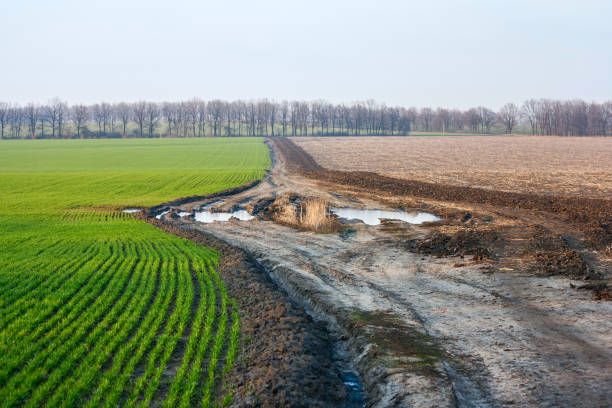
To evaluate land investments accurately, you must first understand the technical distinctions between raw land, unimproved land, and improved land. Raw land is completely undeveloped ground in its natural state. It lacks basic infrastructure such as electricity, public water, drilled wells, septic systems, cleared driveways, or paved road frontage. Raw acreage often requires extensive land surveying, engineering studies, environmental clearing, and municipal permitting before any physical structure can be erected. While raw land carries the lowest initial acquisition cost per acre, it demands significant capital, patience, and technical expertise to unlock its full development value.
Improved land sits at the opposite end of the development spectrum. An improved lot has undergone substantial site preparation to make it ready for immediate construction. These parcels feature established utility connections at the lot line, functional driveways, engineered drainage systems, and approved septic designs or municipal sewer connections. Unimproved land falls directly between these two categories, possessing some basic infrastructure like rough road access or nearby power lines, but requiring further development work. Understanding these physical states allows investors to calculate true total project costs rather than relying solely on the listing price.
Evaluating Core Differences in Capital Expenditure
The upfront purchase price of a land parcel represents only a portion of the total capital required to execute a successful investment. Raw land typically entices buyers with a lower barrier to entry regarding initial purchase price. An investor can acquire substantial raw acreage for a fraction of the per-square-foot cost of a suburban improved lot. However, raw land requires extensive secondary capital expenditure to bring utilities, access roads, and foundation-ready ground to the site. These soft and hard development costs can quickly rival or exceed the original purchase price of the bare dirt.
Improved land demands a significantly higher initial capital outlay at closing. Investors pay a premium for the convenience, risk reduction, and time savings that come with pre-developed infrastructure. However, total project costs for improved land are far more predictable. Because engineering evaluations, utility extensions, and site grading are already complete, investors face fewer unexpected financial surprises during development. Calculating capital expenditure requires balancing low entry prices against the heavy, variable costs of site transformation.

Comprehensive Side by Side Comparison Matrix
Comparing raw land and improved land requires evaluating several key financial, operational, and regulatory metrics side by side. The table below outlines how these two land investment categories perform across critical evaluation factors:
| Investment Factor | Raw Land Parcel Profile | Improved Land Parcel Profile |
| Initial Purchase Price | Low initial entry cost per acre | High purchase price per lot or acre |
| Upfront Capital Needs | Heavy secondary expenditure required | Minimal additional infrastructure costs |
| Development Timeline | Long timeline ranging from 12 to 36 months | Fast timeline ready for immediate construction |
| Regulatory Risk | High risk regarding zoning and perc tests | Low risk with pre-approved building permits |
| Annual Holding Costs | Low property taxes and minimal maintenance | Moderate to high property taxes and HOA fees |
| Financing Availability | Difficult to secure with high down payments | Accessible through standard construction loans |
| Profit Margin Potential | High potential through forced appreciation | Moderate return based on market appreciation |
Evaluating these factors against your available capital and investment horizon helps clarify which land category best supports your long-term wealth building strategy.
The Growth Potential and Appreciation Trajectory of Raw Parcels
Raw land offers unique opportunities for value creation through forced appreciation. While improved land primarily appreciates in tandem with general market inflation and regional housing demand, raw land allows proactive investors to create equity through strategic development milestones. By taking a raw parcel through the entitlement process, securing zoning changes, designing approved subdivision plans, or bringing utility mainlines to the property boundary, an investor adds substantial tangible value without ever pouring a concrete foundation.
This forced appreciation strategy attracts experienced developers and land speculators who understand local municipal planning. Transforming raw dirt into build-ready parcels captures the profit margin that homebuilders and end-users are willing to pay for ready-to-build lots. Additionally, holding raw acreage in the path of urban or suburban growth offers substantial passive appreciation as surrounding development drives up the scarcity value of undeveloped ground.
Primary Advantages of Buying Undeveloped Acreage
- Lower Acquisition Entry Costs: Purchasing raw land allows investors to acquire larger total acreage for less capital, providing higher leverage and scale.
- Maximum Development Flexibility: Undeveloped ground presents a blank canvas free from pre-determined building envelopes, restrictive covenants, or existing structural constraints.
- Minimal Ongoing Property Maintenance: Raw acreage requires virtually no structural maintenance, insurance coverage, or active management compared to improved real estate.
- Substantial Forced Equity Opportunities: Investors can create immense value by completing zoning reclassifications, environmental approvals, and utility extension planning.
Risk Profiles and Regulatory Obstacles in Undeveloped Soil
While raw land offers high upside potential, it carries a elevated risk profile. The primary hazard in buying raw land lies in environmental and regulatory uncertainty. A parcel may appear ideal on the surface, yet harbor hidden physical flaws that render it unbuildable or financially unviable. High seasonal water tables, shallow bedrock ledges, protected wetland buffers, or failing soil percolation tests can immediately halt development plans, locking up investor capital in land that cannot be built upon without exorbitant engineering fees.
Regulatory obstacles present another layer of risk. Municipal planning boards, environmental protection agencies, and local conservation commissions enforce strict land-use bylaws. Obtaining necessary permits for road access, wetland crossings, or driveway curb cuts can turn into multi-year administrative battles. If local zoning laws change or municipal boards reject proposed development plans, raw land investors face holding an asset that cannot fulfill its intended commercial or residential purpose.
The Turnkey Appeal and Immediate ROI of Improved Lots
Improved land appeals to investors and builders who prioritize speed, certainty, and immediate operational execution. The primary value proposition of an improved lot is its turnkey status. Because utilities are stubbed at the property line, soil evaluations are approved, and road access is established, construction can commence almost immediately following closing. This drastically reduces the holding period and eliminates the carrying costs associated with lengthy entitlement phases.
For real estate developers, shortening the timeline between acquisition and sale or lease is critical for maximizing internal rates of return. Improved lots allow speculative homebuilders, commercial developers, and buy-and-hold investors to start generating revenue quickly. By eliminating environmental and municipal approval risks, improved land provides a predictable framework that minimizes costly project delays and construction overruns.
Site Preparation and Utility Connection Financial Breakdown
Transforming raw ground into an improved site requires navigating numerous infrastructure expenditures. The table below provides average industry cost ranges for essential site preparation components required during raw land conversion:
| Infrastructure Category | Average Estimated Cost Range | Key Variables Influencing Final Price | Primary Approving Agency or Entity |
| Boundary & Topo Survey | $2,500 to $7,500 | Property acreage, dense brush, terrain roughness | Licensed Professional Land Surveyor |
| Perc Testing & Septic Design | $1,500 to $4,500 | Soil profile depth, water table height, clay levels | Local Board of Health Officer |
| Private Drilled Well | $6,000 to $14,000 | Depth to bedrock aquifer, casing requirements | Certified Master Well Driller |
| Electric Line Extension | $25 to $60 per linear foot | Distance from mainline, transformer needs, poles | Regional Electric Utility Company |
| Gravel Driveway & Grading | $20 to $45 per linear foot | Culverts required, slope angle, ledge blasting | Town Road Highway Department |
Understanding these individual line items ensures that raw land investors accurately project total conversion budgets before committing capital to a purchase contract.
Navigating Municipal Zoning, Permits, and Building Encroachments
Zoning ordinances establish the legal framework for what can be constructed on any parcel of land. Municipal zoning classifications dictate allowable uses, maximum building heights, lot coverage ratios, setback distances from property lines, and minimum road frontage requirements. When evaluating raw land, investors must verify that their proposed project aligns perfectly with local zoning bylaws or obtain a variance from the local zoning board of adjustment. Securing a zoning variance or special use permit can be a lengthy process with no guarantee of approval.
In addition to zoning rules, land buyers must investigate potential title encumbrances and physical encroachments. Recorded easements, public utility rights-of-way, historical conservation restrictions, and deed covenants can severely restrict the usable footprint of a parcel. Conducting a thorough title search and securing a professional boundary survey ensures that unrecorded access paths or neighboring structures do not compromise your legal rights or construction plans.
Essential Due Diligence Actions Before Signing a Contract
- Conduct a Professional Boundary Survey: Hire a licensed surveyor to locate physical corner markers, verify exact acreage, and map all recorded easements.
- Perform Comprehensive Soil Testing: Complete deep-pit soil evaluations and percolation tests to confirm septic suitability before waiving contract contingencies.
- Verify Deeded Legal Access: Confirm that the property possesses documented, unencumbered access to a publicly maintained road rather than a permissive trail.
- Check Utility Serviceability: Contact local power, water, cable, and gas companies directly to obtain written confirmation of service availability and extension fees.
Environmental Inspections, Perc Testing, and Soil Mechanics
Physical due diligence centers heavily on soil quality and environmental health. In rural locations lacking municipal sewer systems, a passing percolation test is the single most important factor determining whether a parcel is buildable. Soil scientists excavate test pits to observe soil horizons, seasonal high water mark indicators, and bedrock depth. If the soil drains too slowly due to high clay content or too quickly through coarse gravel, standard gravity septic systems cannot be installed, requiring expensive engineered alternatives.
Environmental site assessments are equally vital, particularly for commercial or former agricultural parcels. A Phase I Environmental Site Assessment identifies potential hazardous substances, underground storage tanks, or historical chemical contamination that could impose strict liability on new landowners. Additionally, mapping protected wetlands, floodplains, and habitats for endangered species ensures compliance with state environmental protection acts and prevents illegal encroachment on regulated habitats.

Income Generation Strategies for Both Property Types
Land is often viewed as a non-cash-flowing asset, but creative investors utilize various strategies to produce income while holding land for long-term appreciation. Raw land offers opportunities for resource extraction and land leasing. Property owners can lease raw acreage to local agricultural operators for crop farming or livestock grazing, generating recurring income that offsets property tax obligations. On timberland parcels, executing selective timber harvests under the guidance of a consulting forester yields immediate capital while improving forest health. Other raw land income streams include hunting leases, outdoor recreation rights, and solar farm ground leases.
Improved land generates cash flow primarily through construction and development. Investors can build single-family homes, multi-family units, or commercial structures for resale or rental income. Alternatively, investors can buy improved lots in master-planned communities, hold them as inventory, and sell build-ready pads to local custom homebuilders at a premium during peak market cycles.
Financing Strategies and Lender Requirements Breakdown
Securing financing for land requires navigating distinct underwriting criteria compared to traditional residential mortgages. The table below outlines typical financing terms, down payment expectations, and lender preferences across common land loan options:
| Loan Type & Institution | Typical Down Payment | Standard Loan Terms | Lender Risk Assessment |
| Raw Land Loan (Local Bank) | 30% to 50% down payment | 10 to 15 year term | High risk due to lack of immediate collateral value |
| Farm Credit System Lender | 20% to 30% down payment | 15 to 30 year term | Moderate risk with specialized agricultural focus |
| Improved Lot Construction Loan | 10% to 20% down payment | 12 to 24 month term | Low risk secured by immediate build feasibility |
| Seller / Owner Financing | Negotiated with seller | Flexible custom terms | Risk determined entirely by private contract terms |
Reviewing options through specialized lenders such as Farm Credit East ACA located at farmcrediteast.com or consulting the REALTORS Land Institute at rliland.com provides access to financing programs tailored specifically for land acquisitions.
Property Taxes, Current Use Programs, and Long Term Holding Strategy
Annual property holding costs directly impact long-term net returns. Raw land typically carries low baseline tax assessments because local municipal tax assessors evaluate the property purely as bare earth without structural improvements. To further reduce holding costs on large raw tracts, investors can enroll qualifying acreage in state preferential tax programs, commonly known as Current Use, Tree Growth, or Agricultural Assessment programs. These initiatives assess property based on current productive use rather than potential market development value, slashing annual property taxes by up to ninety percent.
Improved land incurs significantly higher property tax burdens. Once utilities, paved access, and site grading are established, tax assessors increase the land valuation to reflect its build-ready status. Furthermore, improved lots situated within planned developments often carry recurring homeowners association fees, road maintenance assessments, and municipal utility standby charges that increase carrying costs over time.
Hidden Holding Expenses That Shrink Profit Margins
- Special Municipal Assessments: Local governments may levy unexpected taxes on improved lots to fund regional sewer upgrades, water main repairs, or road paving.
- HOA and Community Dues: Improved lots in planned subdivisions often carry mandatory monthly or annual association fees for common area upkeep and security.
- Property Tax Recapture Penalties: Removing raw land from state Current Use tax programs to begin development triggers heavy financial penalties and rollback taxes.
- Liability Insurance Premiums: Maintaining adequate general liability insurance coverage on accessible land parcels protects owners from legal claims resulting from unauthorized trespassing or recreational accidents.
Warning Signs of an Overpriced Improved Parcel
- Excessive HOA Construction Mandates: Subdivisions that require buyers to build within short timeframes can force premature construction under unfavorable market conditions.
- Stagnant Neighborhood Absorption Rates: High volumes of unsold improved lots lingering on the market indicate local oversupply and weak end-user demand.
- Unresolved Utility Capacity Caps: Pre-serviced lots where municipal water or sewer districts have instituted moratoriums on new connections cannot be built upon immediately.
- Inflated Developer Markups: Improved lots priced significantly higher than the combined cost of underlying raw land plus actual site development expenses offer compressed profit margins.
Strategic Decision Framework for Choosing Your Investment Strategy
Selecting between raw land and improved land ultimately depends on matching property characteristics with your financial capability, risk tolerance, and investment horizon. Raw land is the superior choice for patient investors seeking lower entry costs, high appreciation potential through forced value creation, low holding costs, and total development flexibility. It suits high-net-worth individuals, experienced land developers, and patient wealth builders who can absorb long regulatory timelines and manage complex physical site preparation.
Improved land is the ideal investment for active homebuilders, real estate developers, and conservative investors seeking capital preservation, predictable execution, and fast project turnarounds. By paying a premium for turnkey infrastructure, improved land buyers eliminate regulatory and environmental risk, secure simpler bank financing, and move directly into the revenue-generating construction phase. Aligning your strategy with your core strengths ensures maximum capital efficiency and long-term investment success.
Conclusion
Both raw land and improved land offer compelling advantages within a well-balanced real estate investment portfolio. Raw land provides an affordable entry point and immense potential for value creation through strategic entitlements, zoning optimization, and long-term land banking. Conversely, improved land removes development friction, providing a secure, turnkey foundation for immediate construction and swift financial returns. By conducting rigorous due diligence, accurately accounting for infrastructure expenses, and partnering with experienced land professionals, you can confidently navigate the market and select the land asset that best accelerates your wealth creation goals.
Frequently Asked Questions
Which land type generates a higher return on investment over time?
Raw land generally offers higher percentage returns on capital invested when the buyer successfully executes forced appreciation strategies, such as securing zoning changes or subdividing large parcels. However, improved land often delivers higher total cash returns over shorter timeframes because it can be developed immediately into income-producing residential or commercial buildings.
Is it harder to get a mortgage for raw land compared to improved land?
Yes, securing a traditional loan for raw land is significantly more challenging. Lenders view raw land as a higher risk asset because it lacks immediate collateral structures and produces no cash flow. Consequently, raw land loans require higher down payments, higher interest rates, and shorter repayment terms compared to improved lot loans or construction financing.
What is the biggest hidden cost when buying raw land?
The biggest hidden cost in raw land development is typically utility extension and specialized site preparation. Running power lines several hundred feet from the road, blasting subsurface granite ledge, or building an engineered raised-mound septic system can add tens of thousands of dollars in unexpected costs that quickly erode initial profit projections.
Can I convert raw land into improved land and sell it without building?
Yes, this strategy is known as land entitlement and lot development. Many professional land investors acquire raw parcels, complete boundary surveys, secure municipal zoning approvals, perform perc testing, bring utilities to the lot line, and sell the resulting improved buildable pads directly to homebuilders or private buyers for a substantial profit without ever constructing a building.
How do property taxes differ between raw and improved land?
Raw land carries significantly lower property tax burdens because it is assessed purely on its undeveloped ground value, especially if enrolled in state Current Use or agricultural tax programs. Improved land is assessed at a much higher market value due to the presence of utilities, road infrastructure, and build-ready status, leading to higher annual property tax payments.